[Name] Phone Radio
Your phone, with a long-range radio on its back.
It snaps to the magnets on an iPhone or its case. It talks to the collar by long-range radio and to the app by Bluetooth. Take it off when you don't need it.
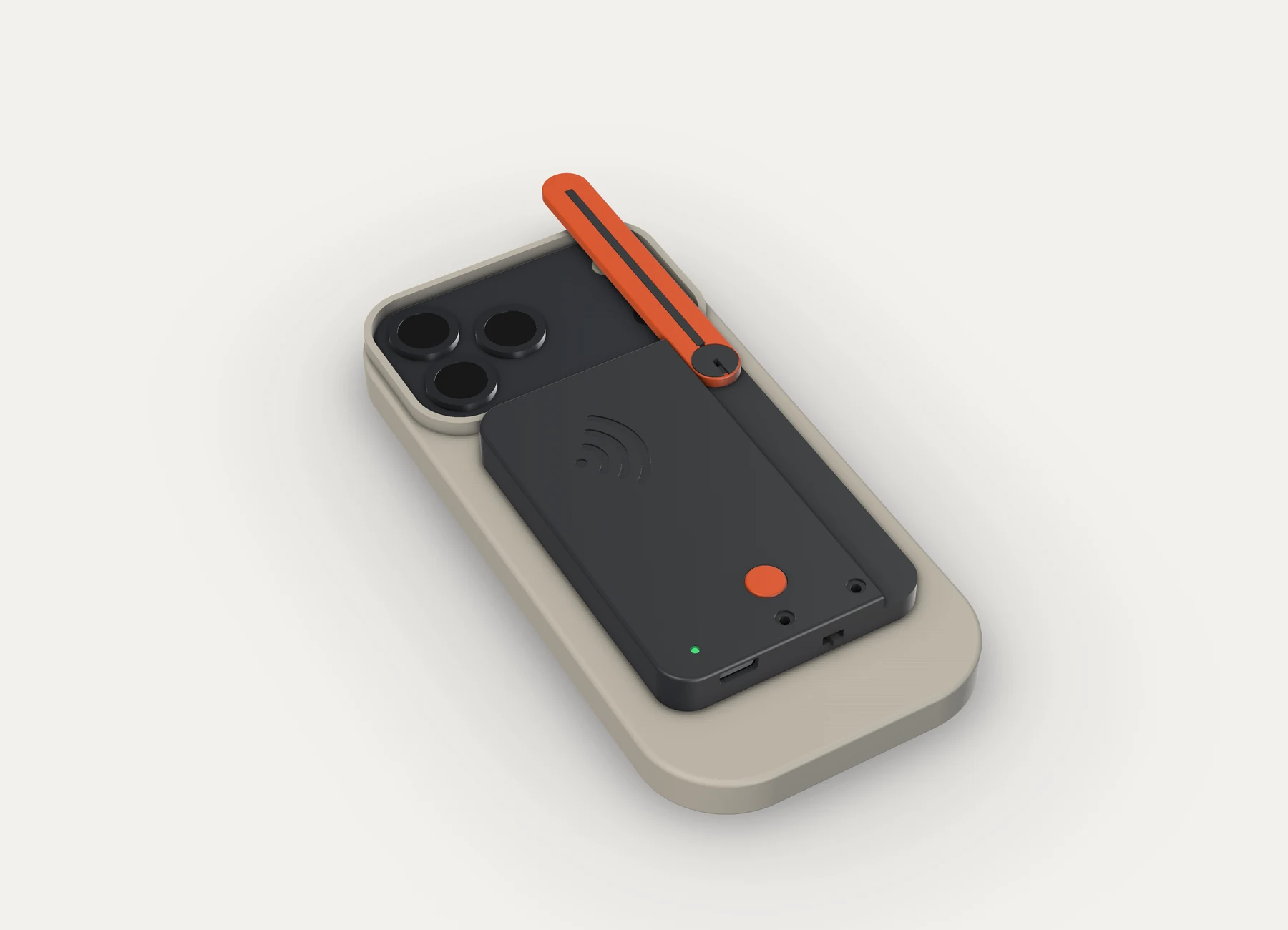
[Name] Phone Radio
It snaps to the magnets on an iPhone or its case. It talks to the collar by long-range radio and to the app by Bluetooth. Take it off when you don't need it.
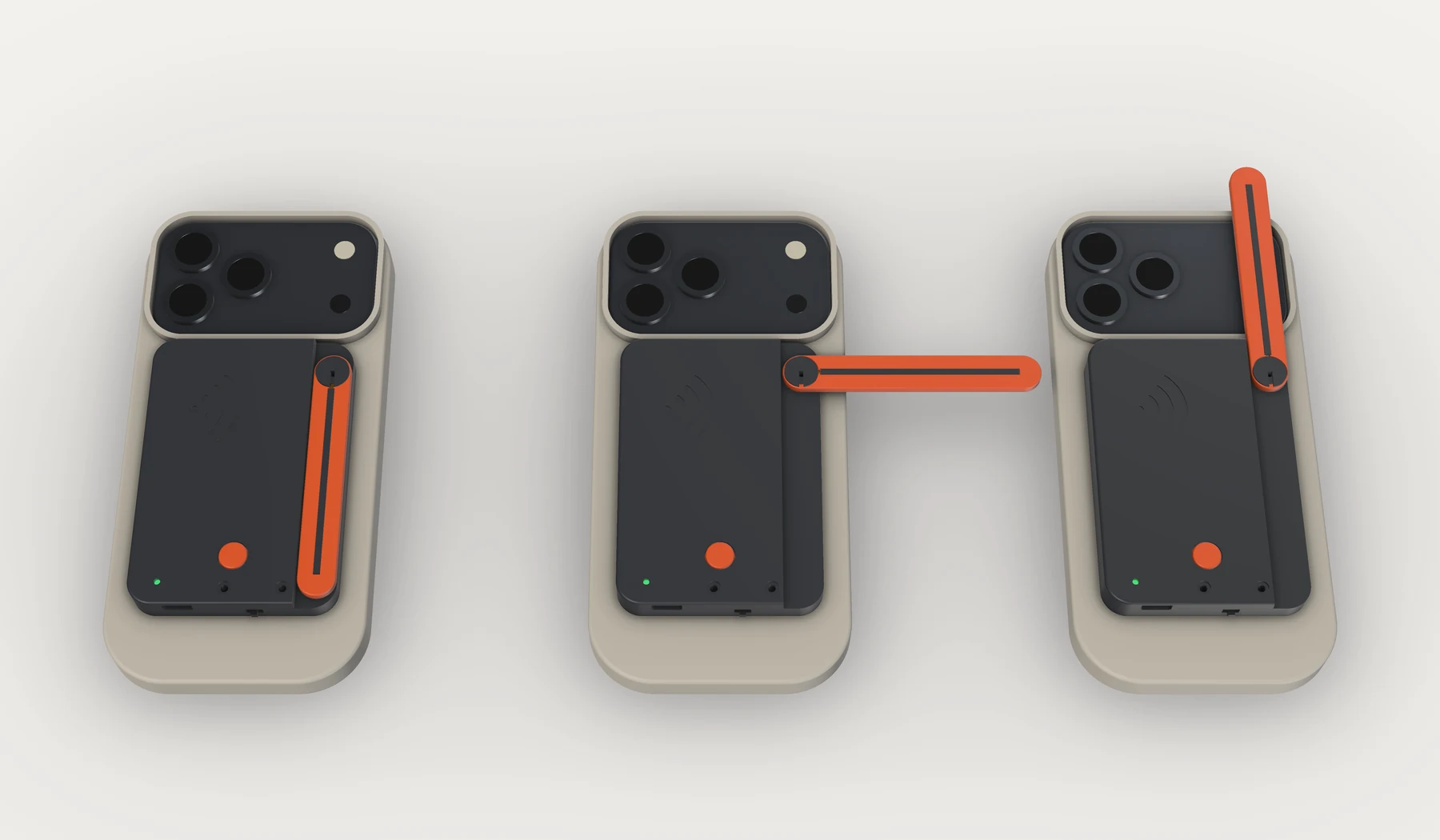
Folded down, it slips into a pocket and still listens. Swung out to the side or straight up, the antenna clears your hand and reaches further.
Straight up, it stands beside the camera flash. Fold it aside for flash photos.
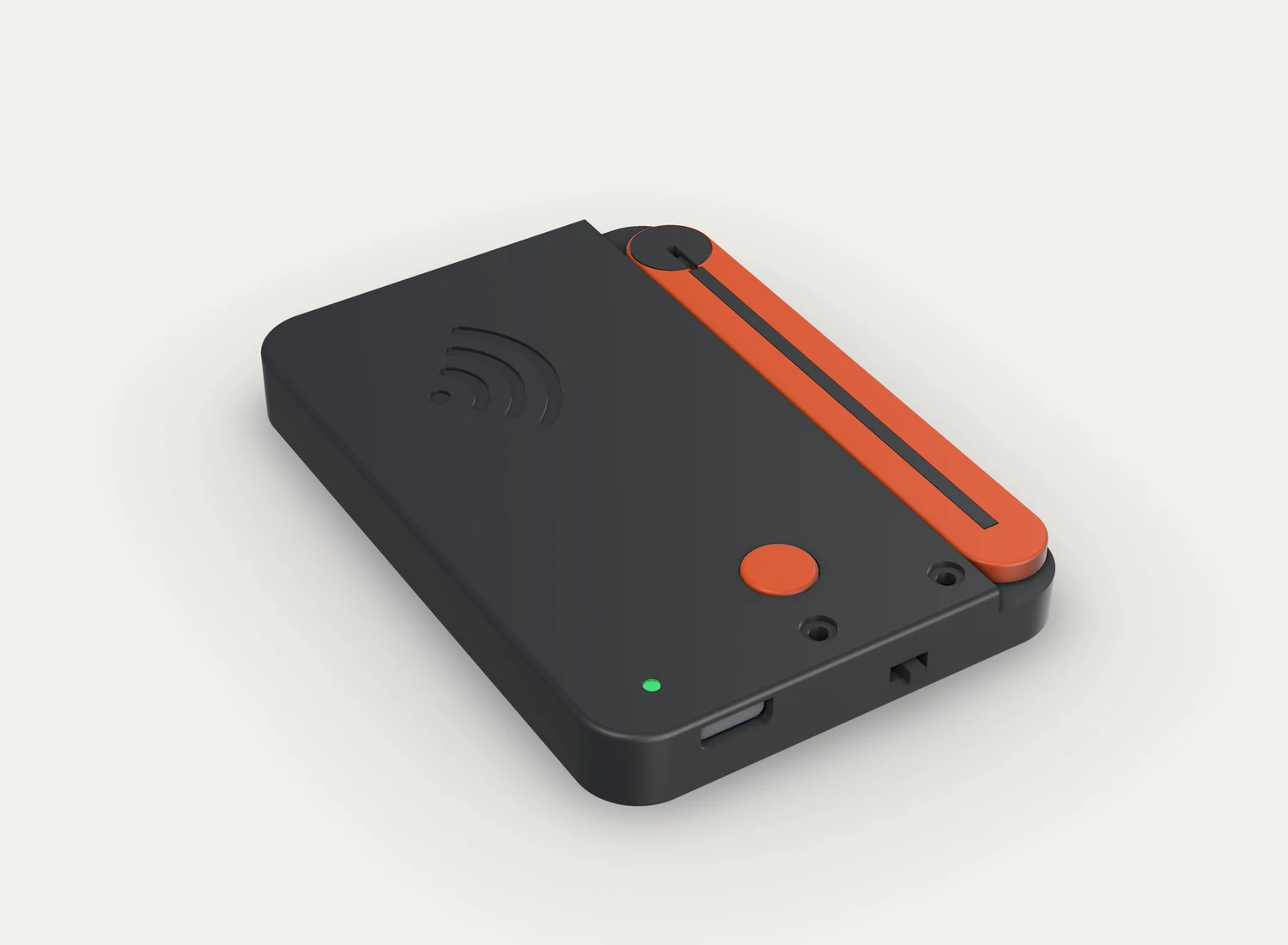
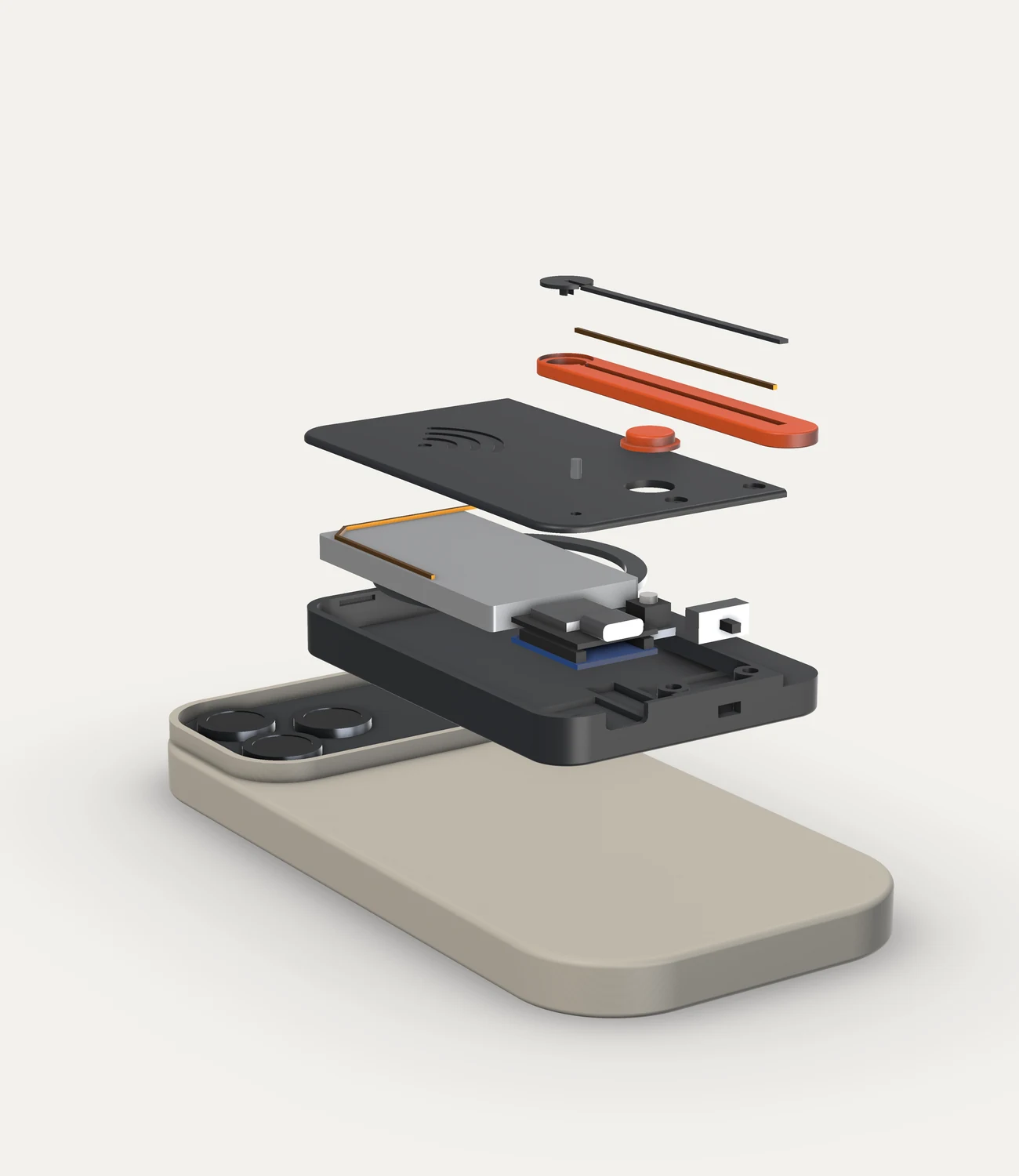
Built to Apple's published magnet layout: a ring, plus a second magnet that stops it turning. The top edge stops short of the cameras.
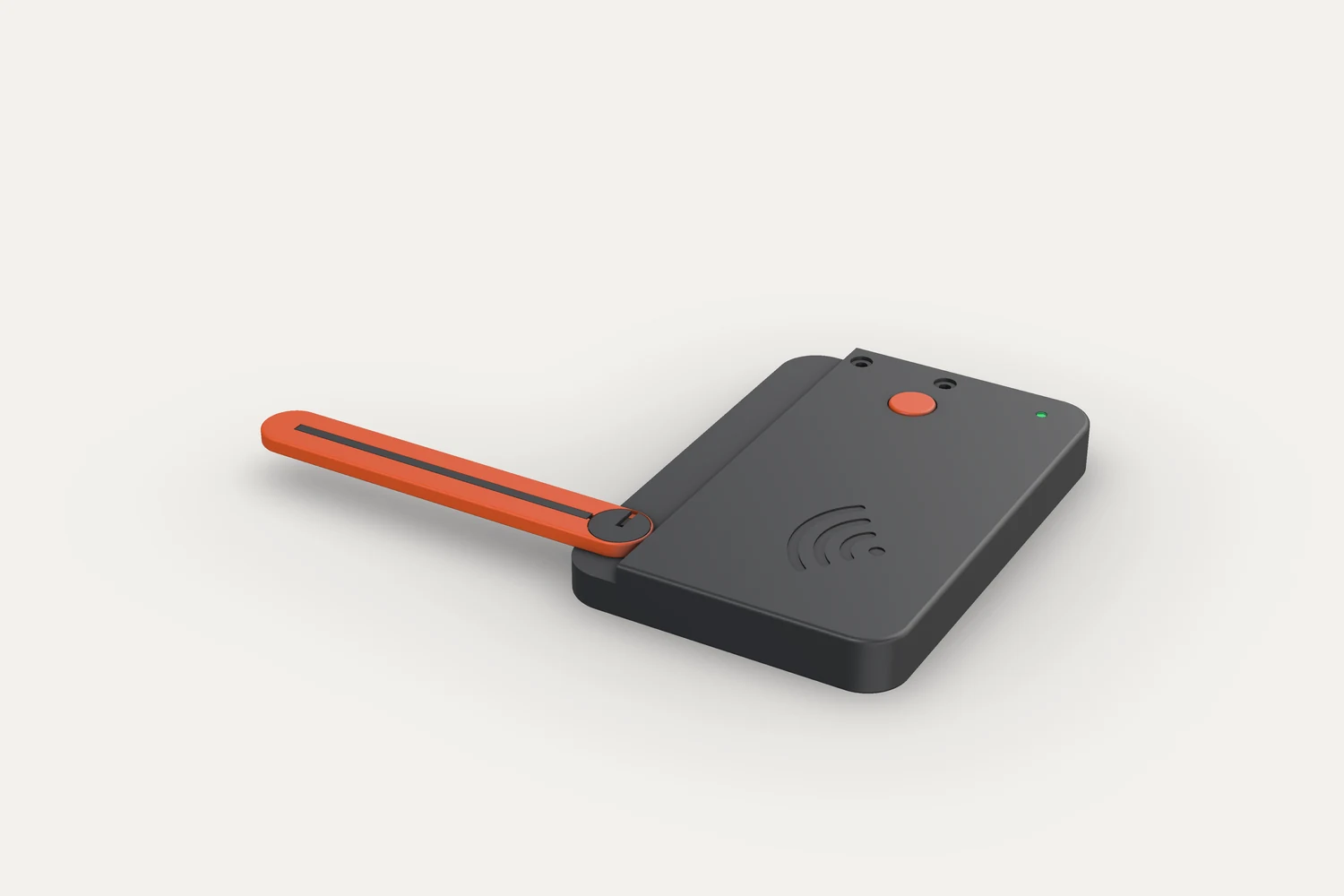
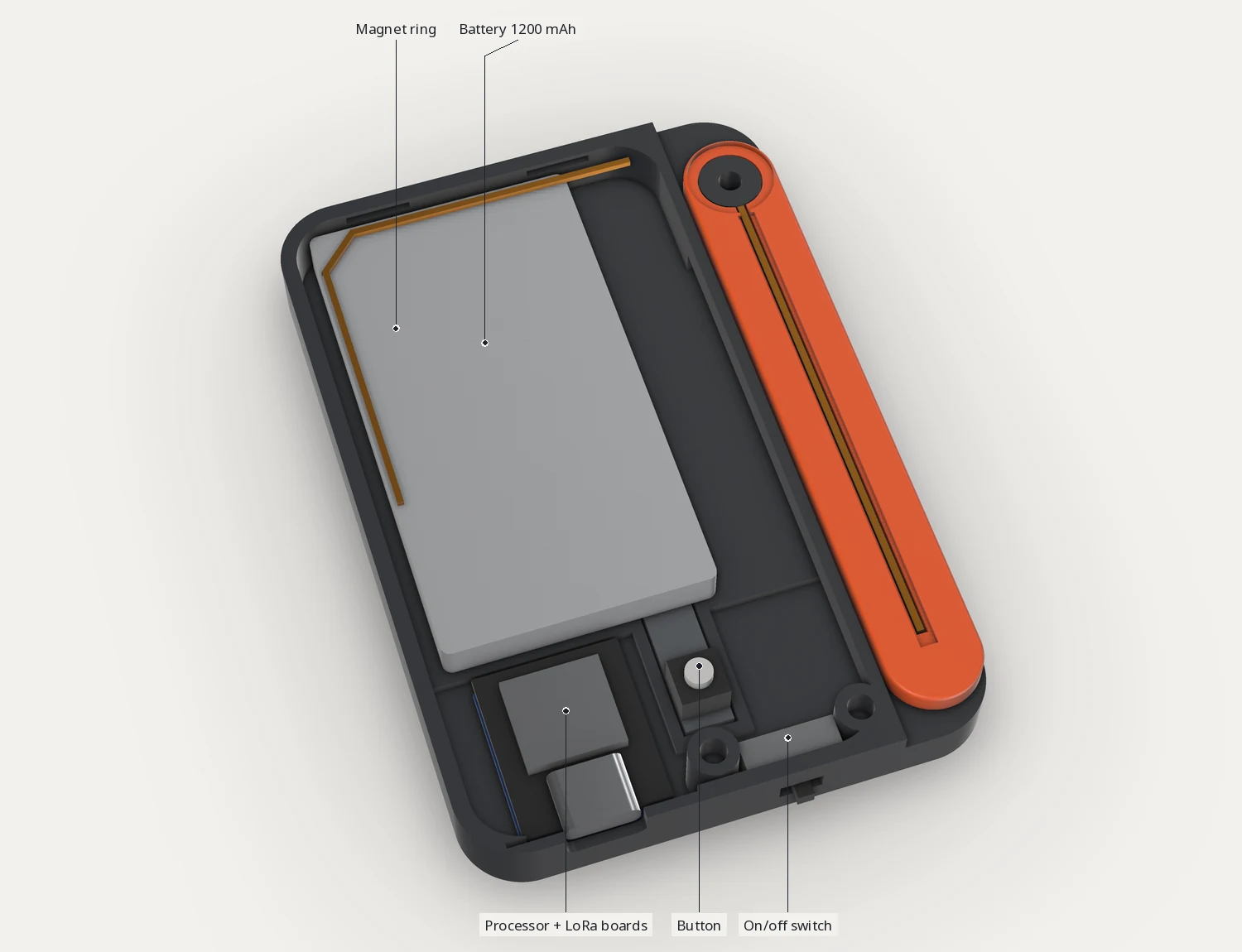
The radio never draws on your phone. A slide switch turns it off; one button pairs it; a small light tells you it is alive.
Worked out, not measured: about 4 days of listening all day on one charge.
All the way round
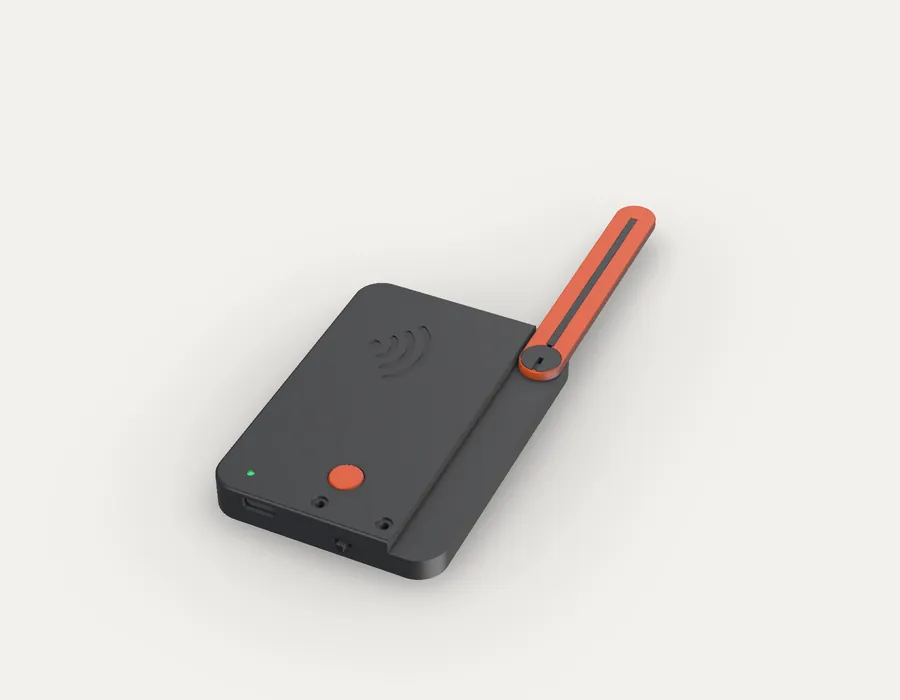 Drag to turn
Inside
Every part is a real one you can buy, and every printed piece has a file. The build guide lists them.
Numbers
| Size | 64 × 92 × 10.8 mm |
|---|---|
| Weight | About 66 g |
| Fits | Any iPhone with MagSafe magnets, bare or in a magnetic case. Drawn against the iPhone 18 Pro Max. |
| Battery | 1200 mAh, charged by USB-C |
| Battery life, worked out | About 4 days of all-day listening |
| Radios | LoRa (915 MHz) to the collar, car and home; Bluetooth to the app |
| Antenna | Two wires: one fixed inside, one in the swing-out arm |
| Controls | On/off switch, one button, one light |
| Material | PETG |
Battery life figures are worked out from the parts' data sheets with cautious inputs; the build guide shows the sums. They are not test results. Weights are worked out from the print files and the parts' data sheets.