A collar, a clip-on radio for your phone, a monitor for the car and a base for the house. They talk to each other directly by long-range radio, so there is no cell tower in the loop and no plan to pay for.
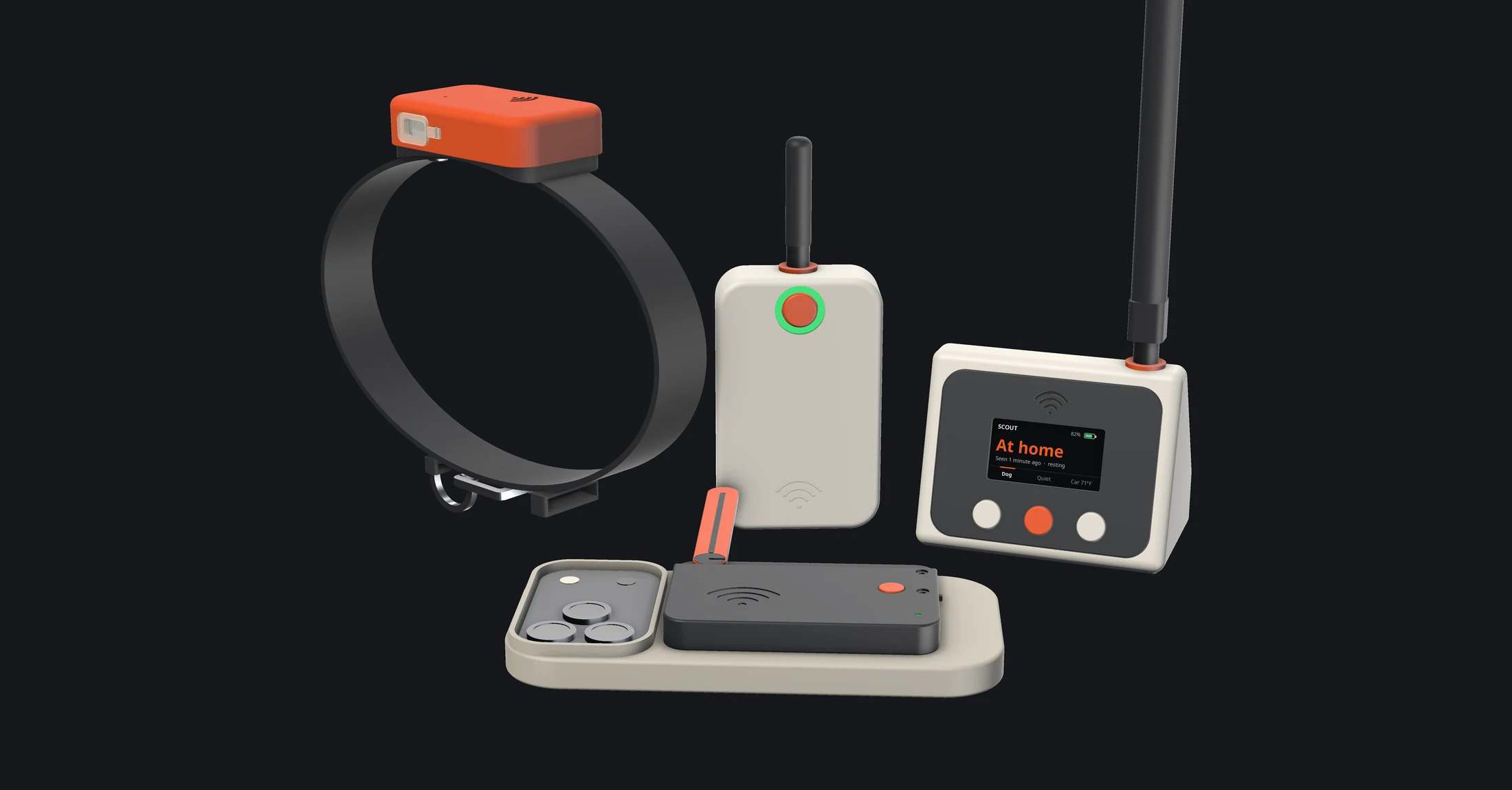
Four pieces
Start with the collar and the phone radio. Add the car monitor and the home base when you want them. Each one is a finished shape you can print on a desktop 3D printer.

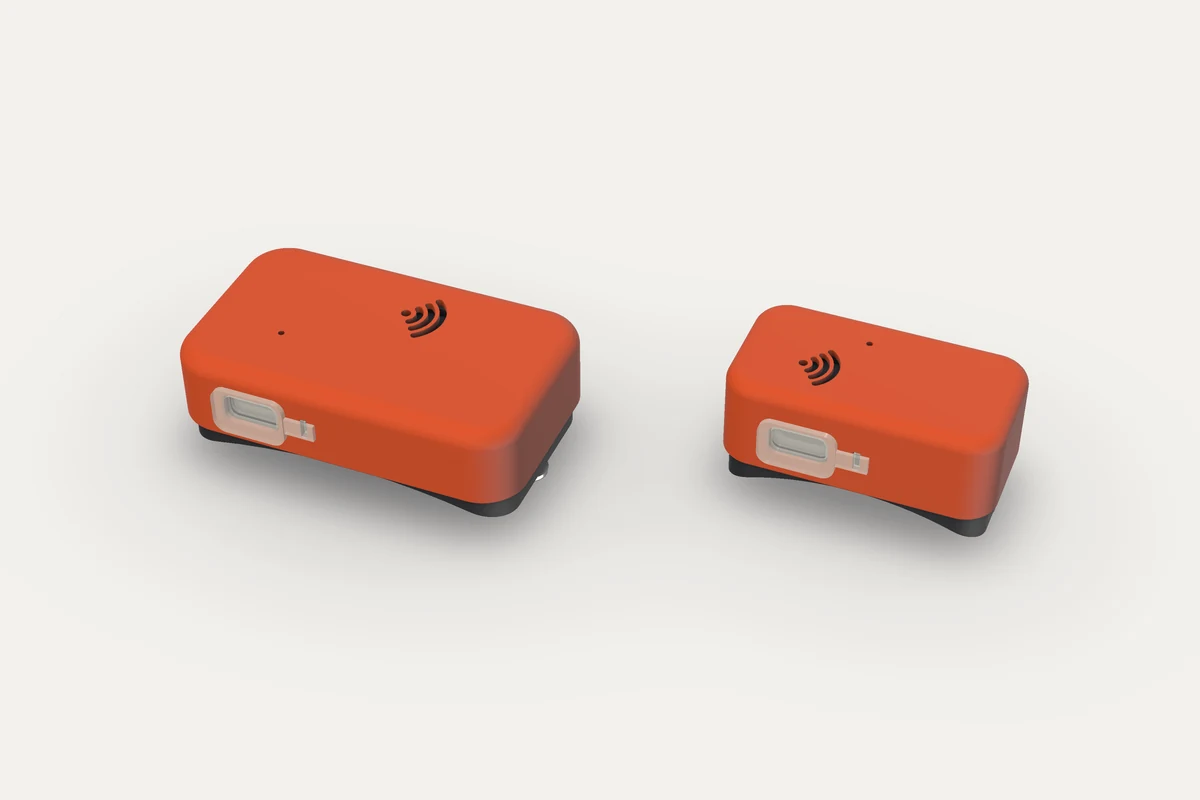
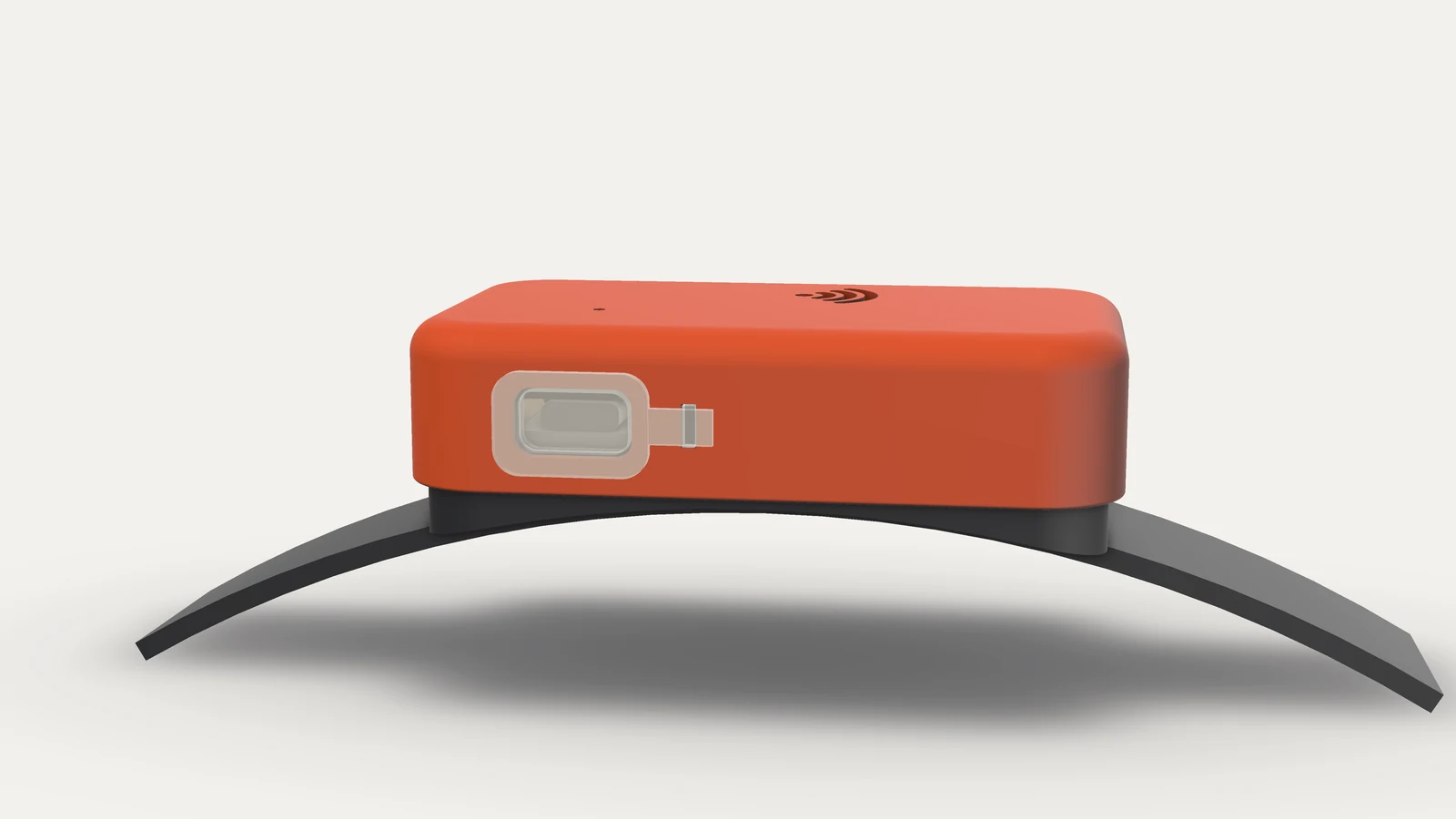
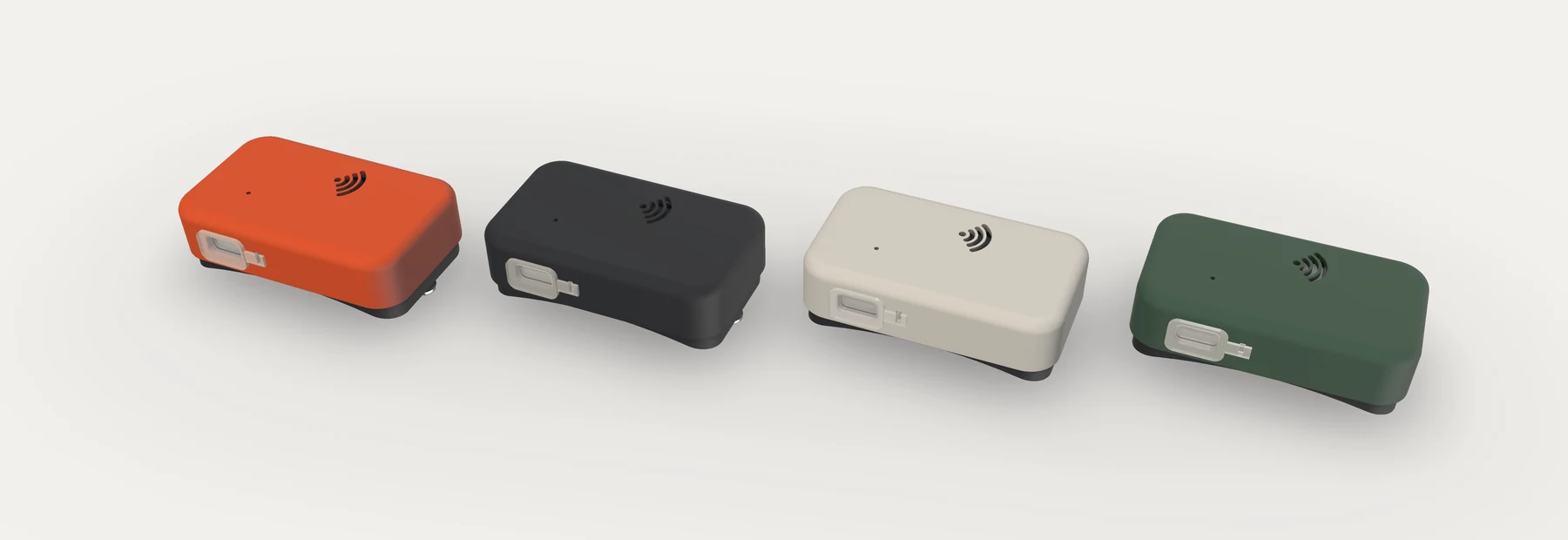
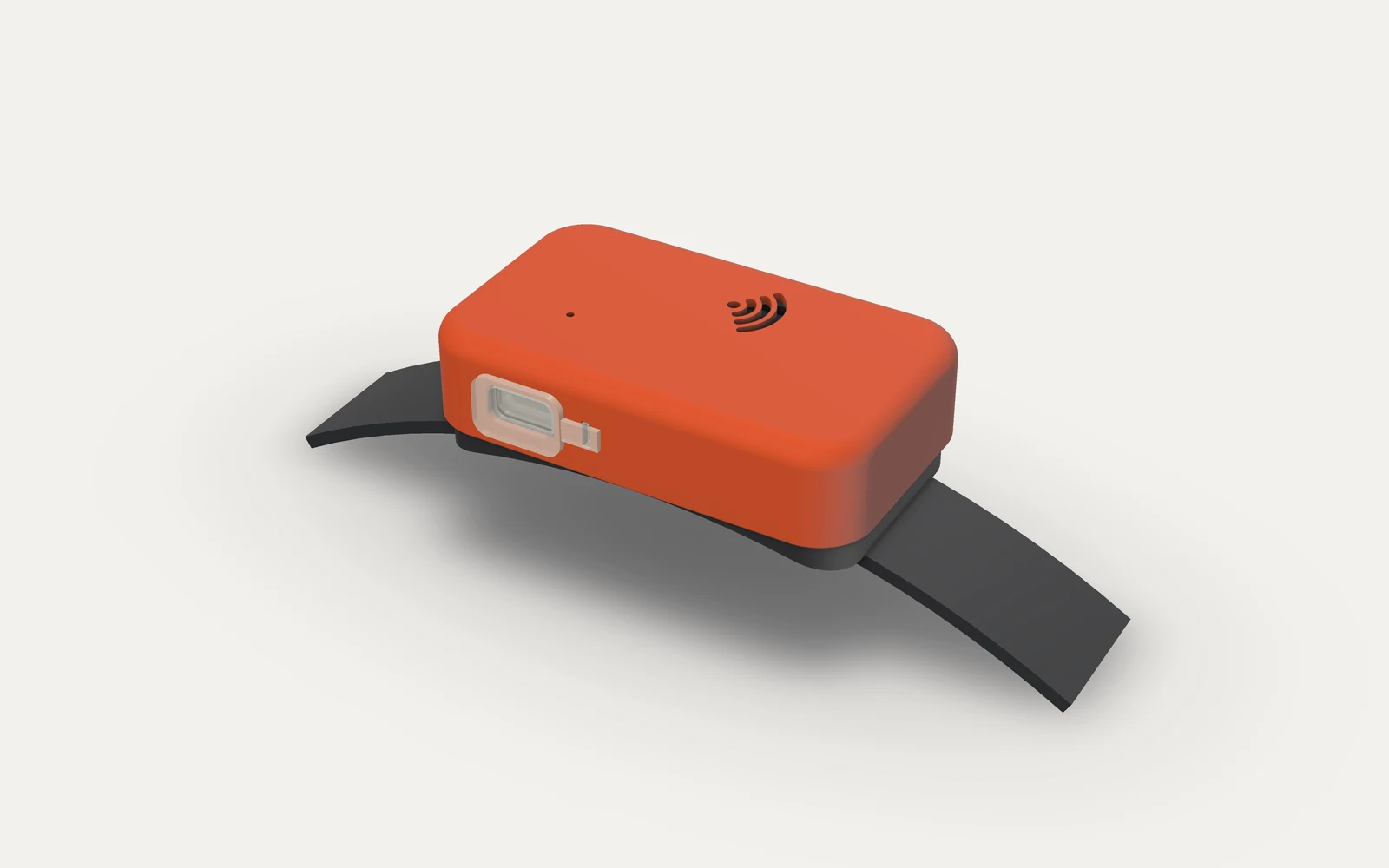
Tracks, listens, and speaks in your voice. One sealed box inside a soft bumper, on any strap.
See the collar →
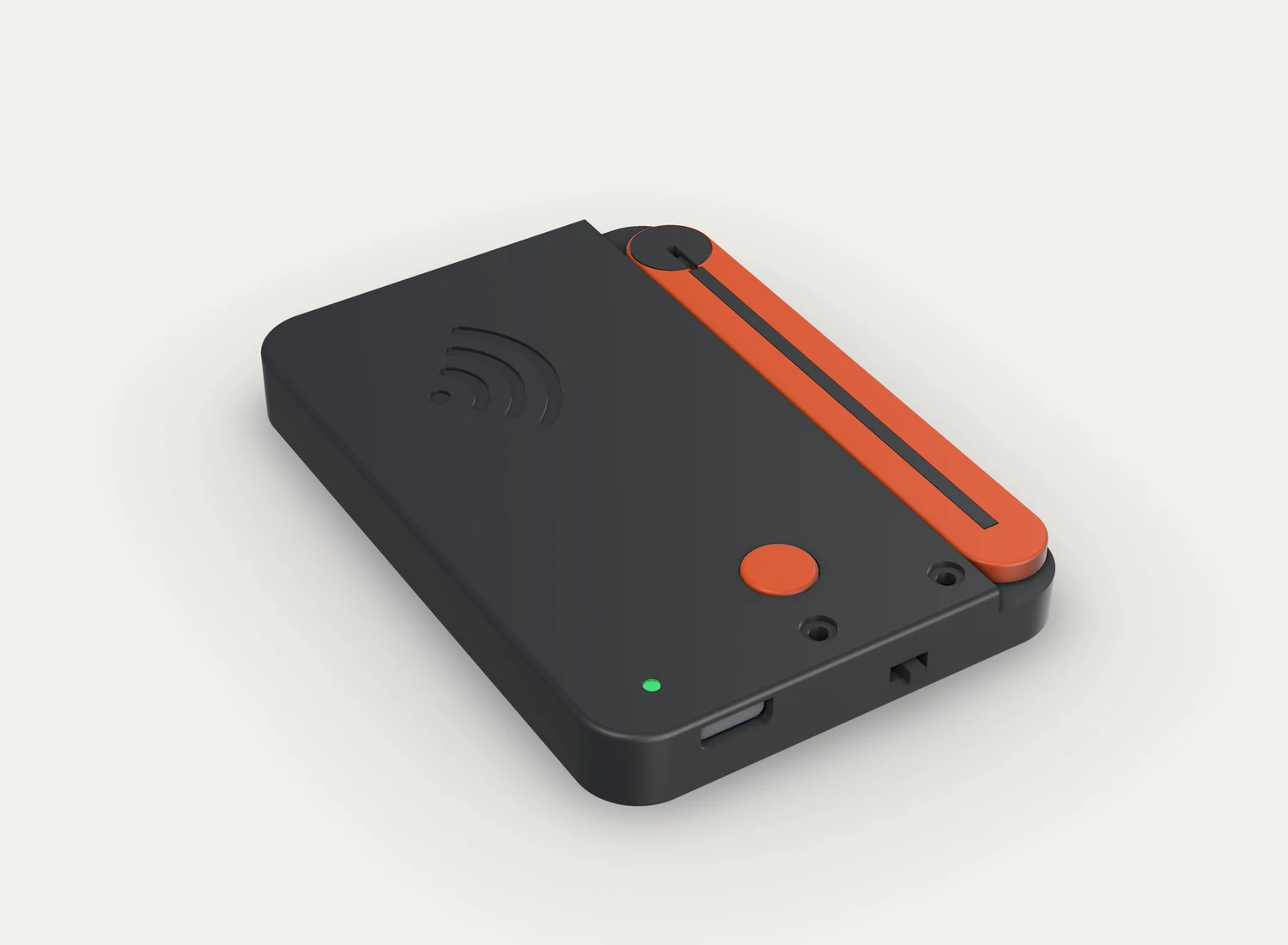
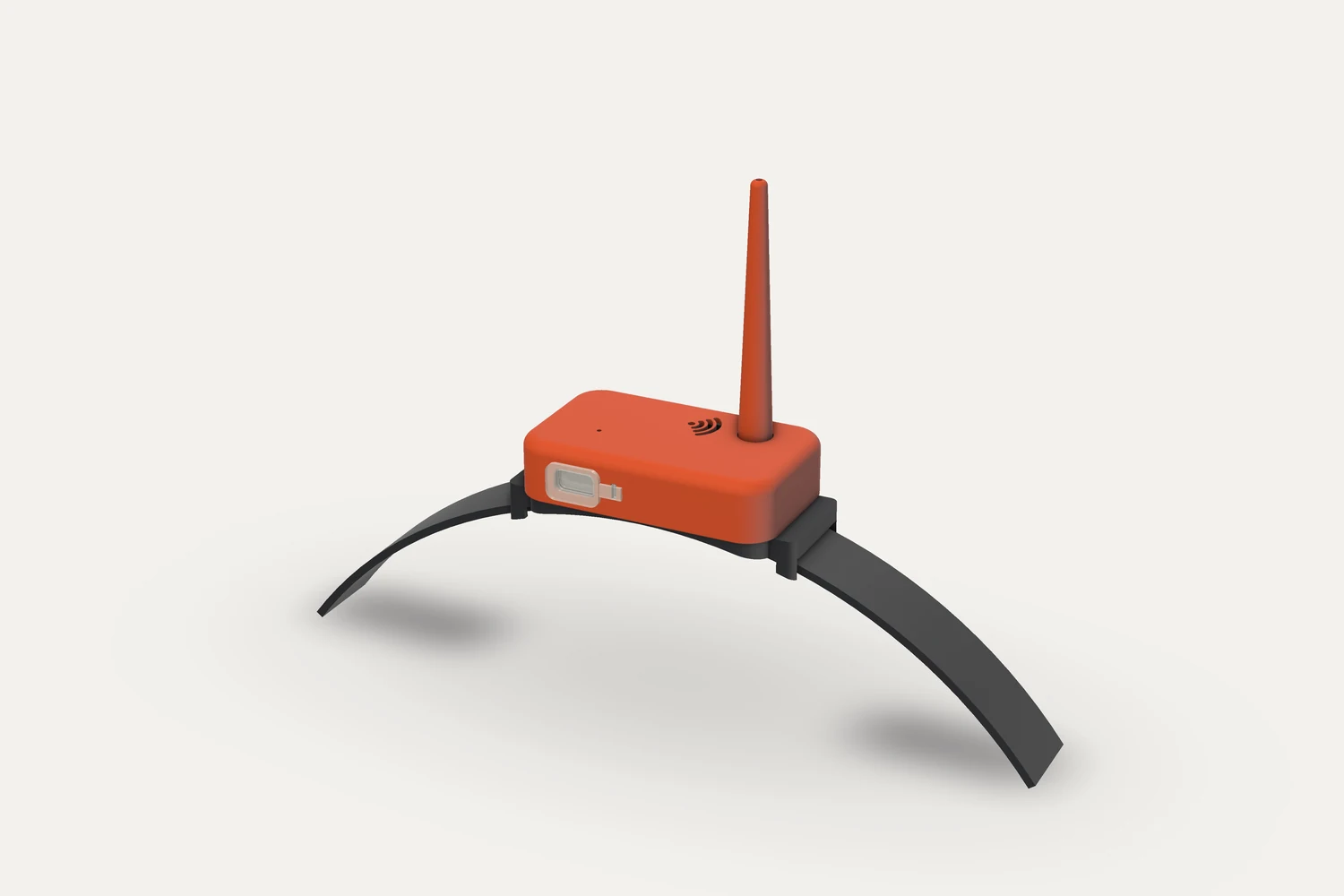
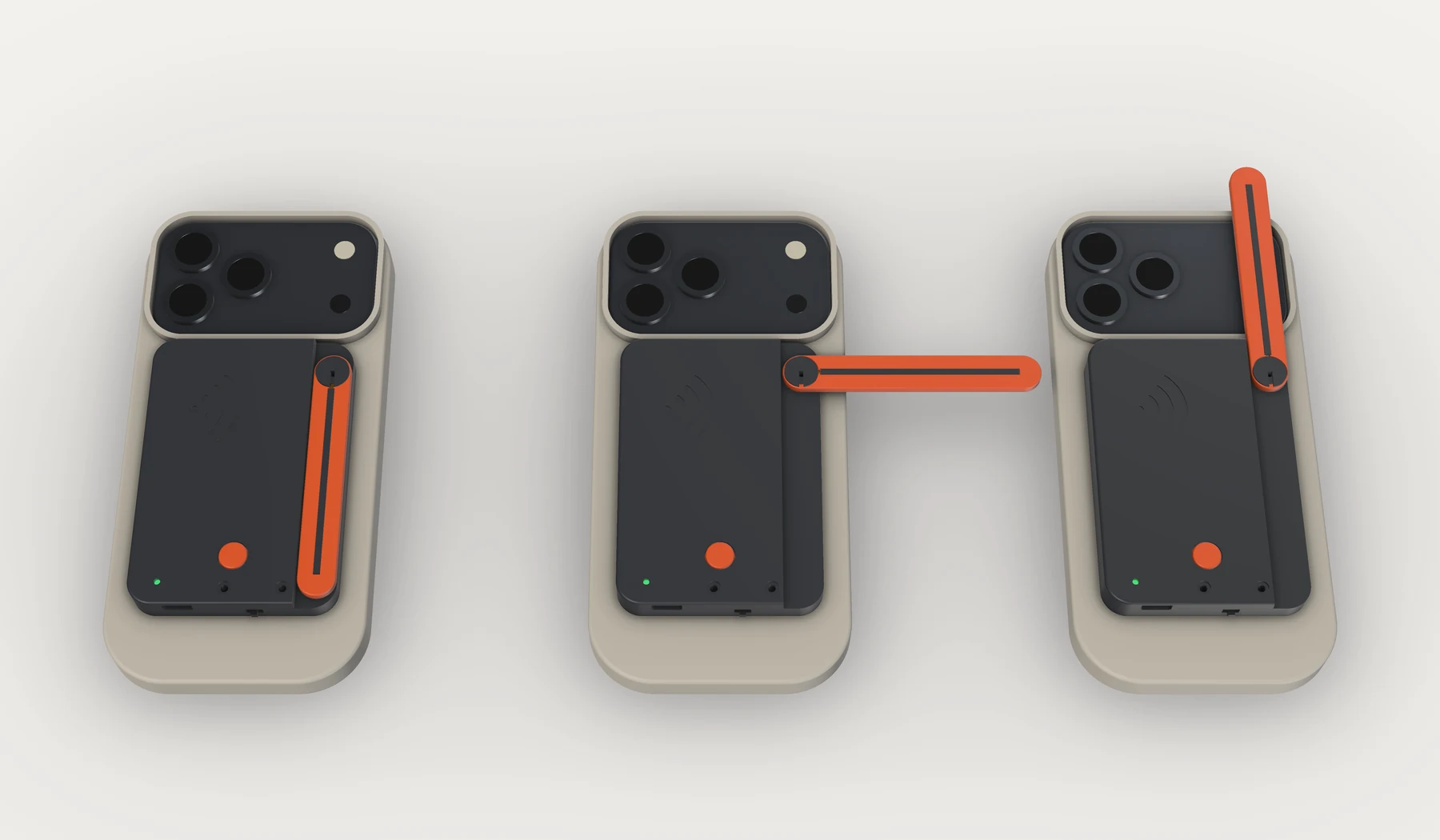
A long-range radio that snaps to the back of your iPhone. The antenna swings out when you need reach.
See the phone radio →
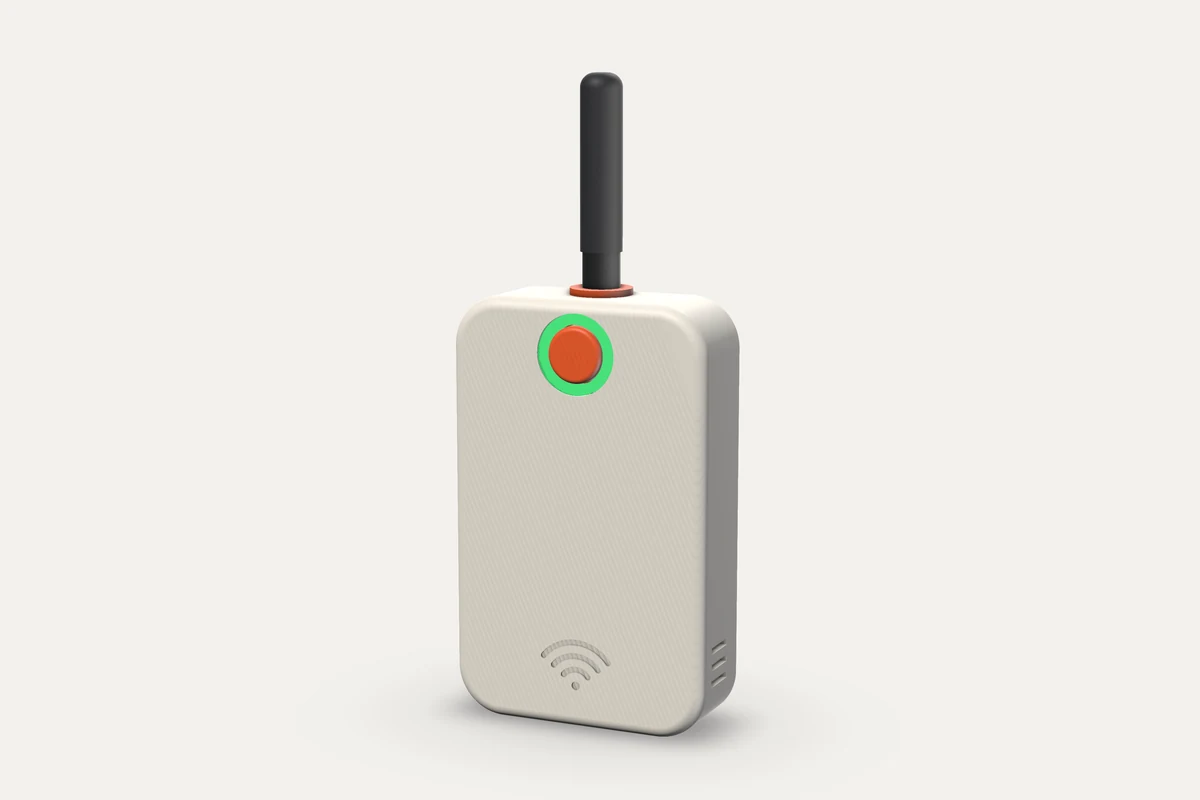
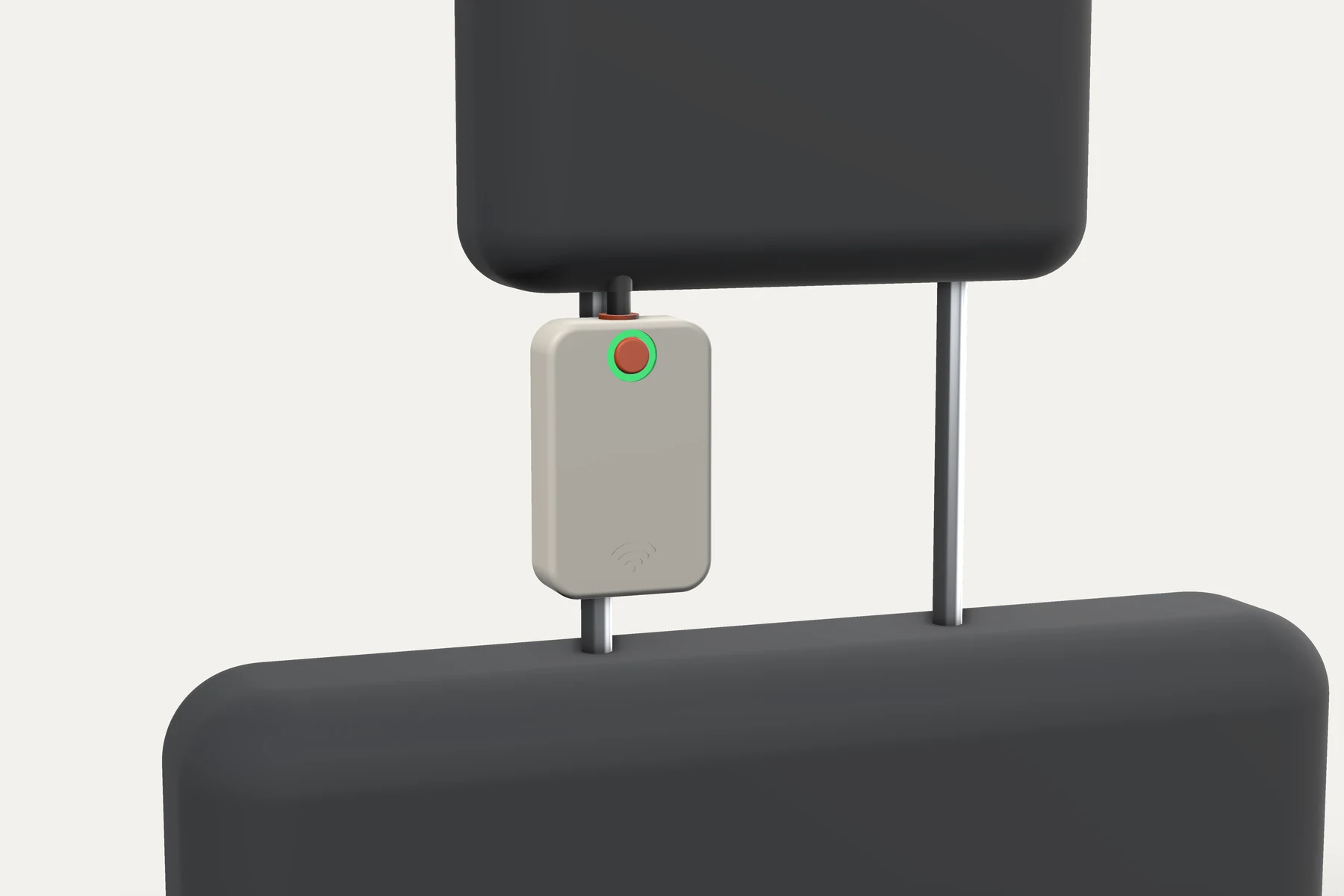
Stays in the car with your dog and warns your phone when the cabin starts to heat up.
See the car monitor →
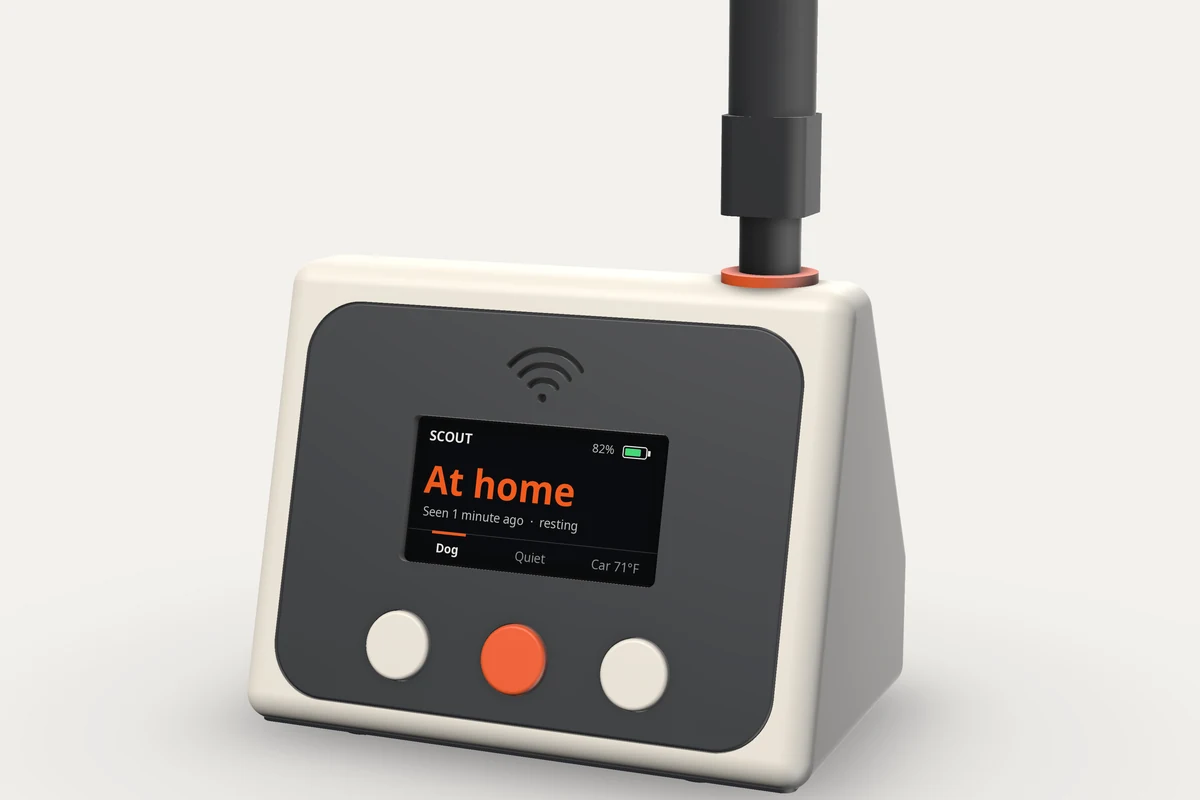
A small screen for the house. Is the dog home? Look up.
See the home base →Three collars
All three do the same jobs and talk to the same phone radio, car monitor and home base.

The full-size box with the big battery. For medium and large dogs. About 3 days of walks on a charge.
See the collar →
The same parts in a box about half the size, on a 3/4 inch strap. For small dogs.
See the small collar →
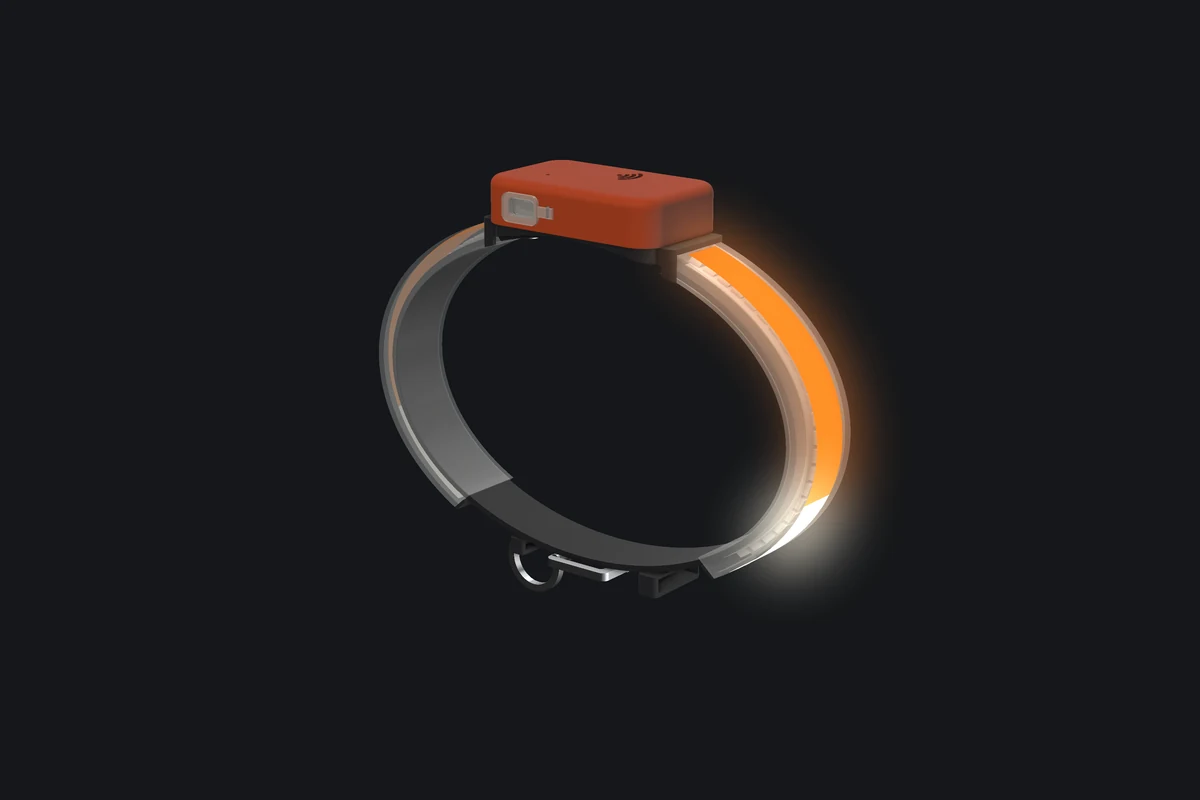
The collar with a band of light down each side of the strap. White points at the ground; the rest glows dimly.
See the light collar →Going further
The next step past store-bought boards, the antenna question the drawings cannot answer, and how the whole set is used.

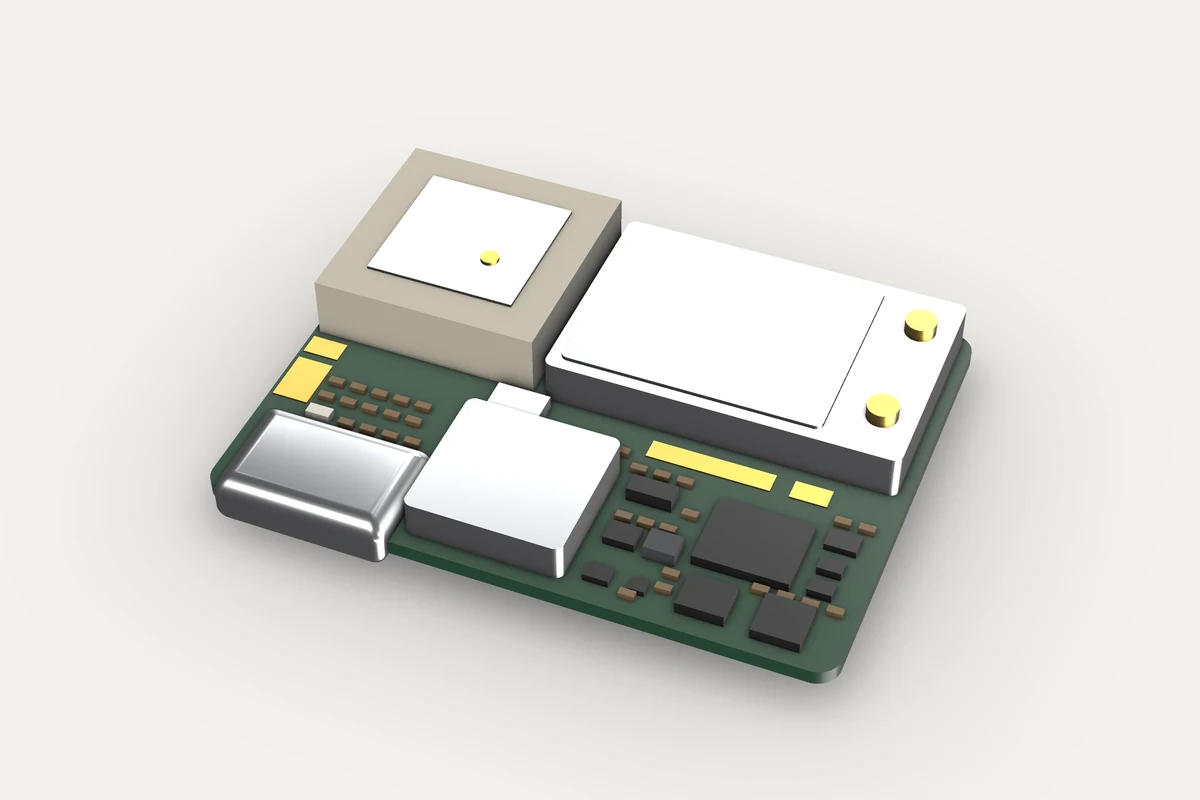
One board in place of four. The same footprint holds a 2000 mAh battery, and tracking lasts 3 days, not 18 hours.
See the board →
Five antennas to try on the dog, from a strip inside the bumper to a flexible whip. The dog decides.
See the five →
Charge, pair, fit, walk, come home. A short guide to all four pieces.
Read the guide →What it does
See your dog on a map. Ask the collar for a fresh position whenever you want one.
Play a command in your own recorded voice from the collar. Or a tone. Or a vibration.
The collar notices barking and tells you. It can answer with a sound or a vibration, if you turn that on.
The car monitor watches heat and humidity where the dog is, and warns you while there is still time.
Rest, walk, run: the motion sensor keeps the day's tally.
At home, the base keeps listening. With Wi-Fi it will pass reports to your phone when you are away.
How it works
The collar sends its position by long-range radio (LoRa, in the licence-free 915 MHz band). The radio on the back of your phone hears it and hands it to the app over Bluetooth. Commands go back the same way. The car monitor and the home base join the same network.
There is no service in the middle to subscribe to. The radios are yours, and they talk to each other.
Messages are locked with keys that only your phone holds. The home base can read reports; it cannot send commands.
This version has sound and vibration only. A vibrate command carries the time it was sent, and the collar ignores one that is more than five seconds old.
The app
iPhone first. These screens show the planned design; the app is not built yet.

Collar
The electronics sit in a hard box. A soft bumper wraps it, so there is no hard edge for another dog to grab or chip.
The bumper snaps off. Change the color, or replace it when it has been chewed.

Phone Radio
The phone radio holds on by magnets and comes off in a second. Its antenna folds flat for the pocket and swings out when you want reach.

Car Monitor
The car monitor straps to a headrest post, up where the air is hottest. One press when you step away, and the ring turns green: it is watching.
Where this stands
All four devices, the two extra collars and the antenna test parts are drawn, with print files, parts lists and wiring. The custom board is chosen and placed, not yet laid out. The software is designed, not written.
Nothing has been built or tested. Battery life figures are worked out from data sheets, not measured. Range is not quoted until it has been measured.
This is a prototype. Radio approval (FCC) comes before any sale, and "[Name]" is a placeholder name.