[Name] Custom Board
The collars on this site are built from four store-bought boards. This is one board made for the job. It is smaller, it leaves room for a bigger battery, and it lets each part be chosen for battery life.


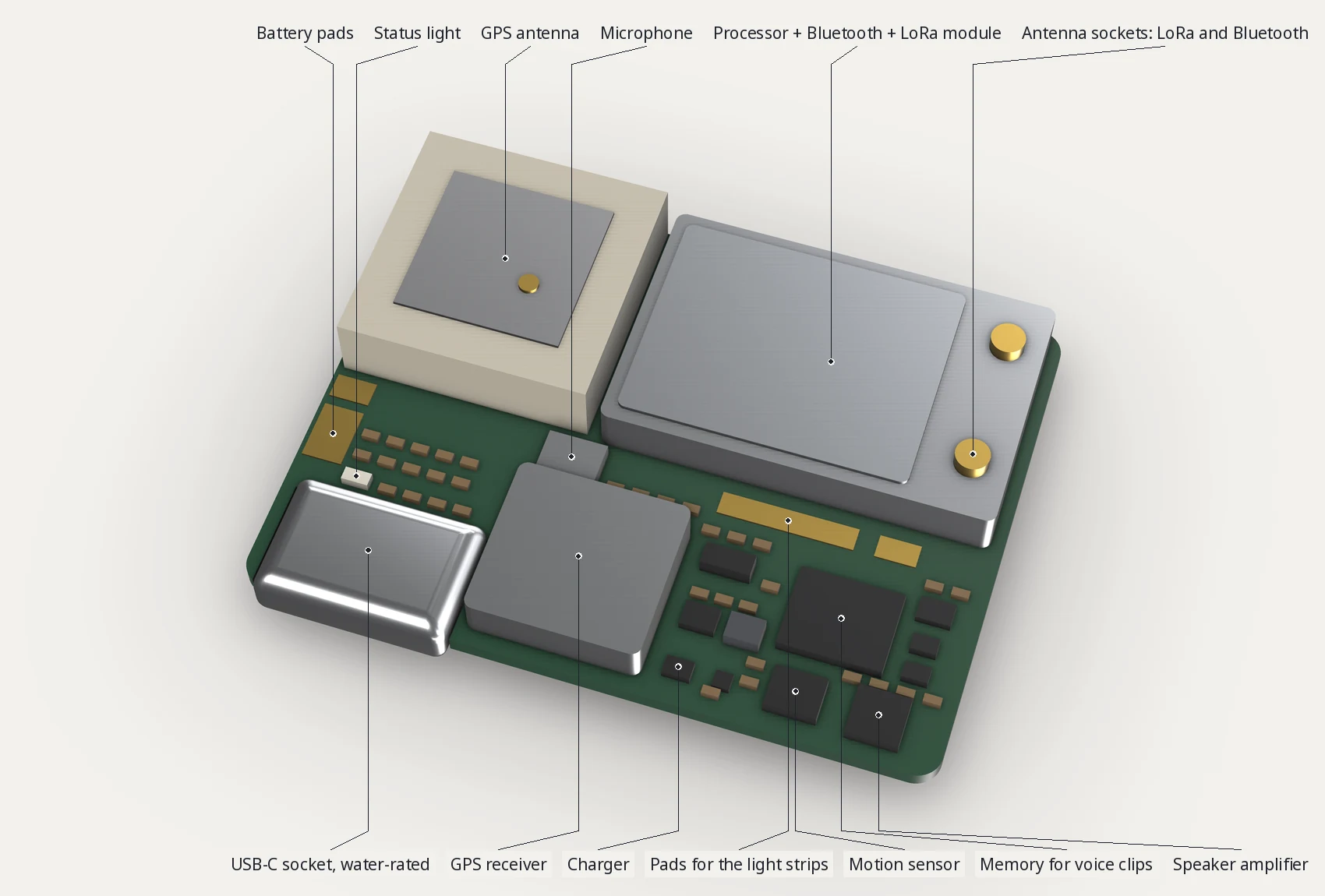
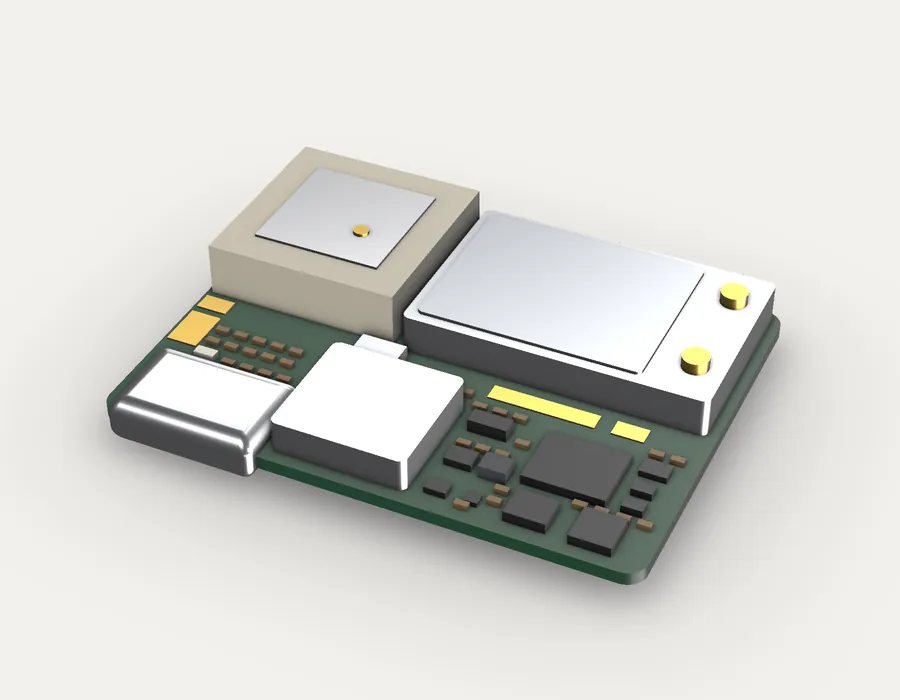
The processor board, the LoRa board, the GPS board and the amplifier board, with the GPS antenna, become one board 40 × 30 mm. The tallest thing on it is the GPS antenna.
The processor, Bluetooth and LoRa radio are one module that already has FCC approval. The rest is small parts around it.

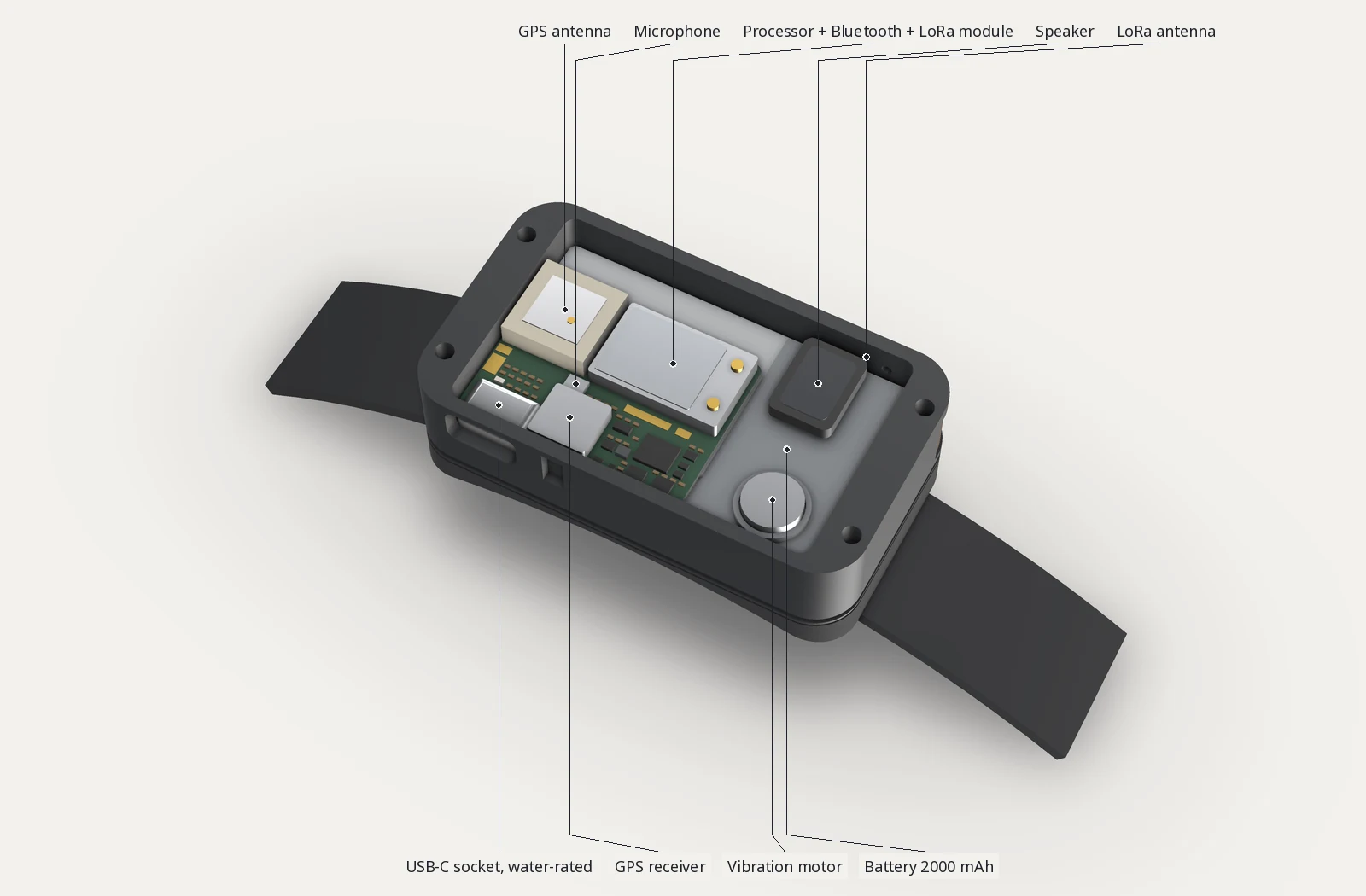
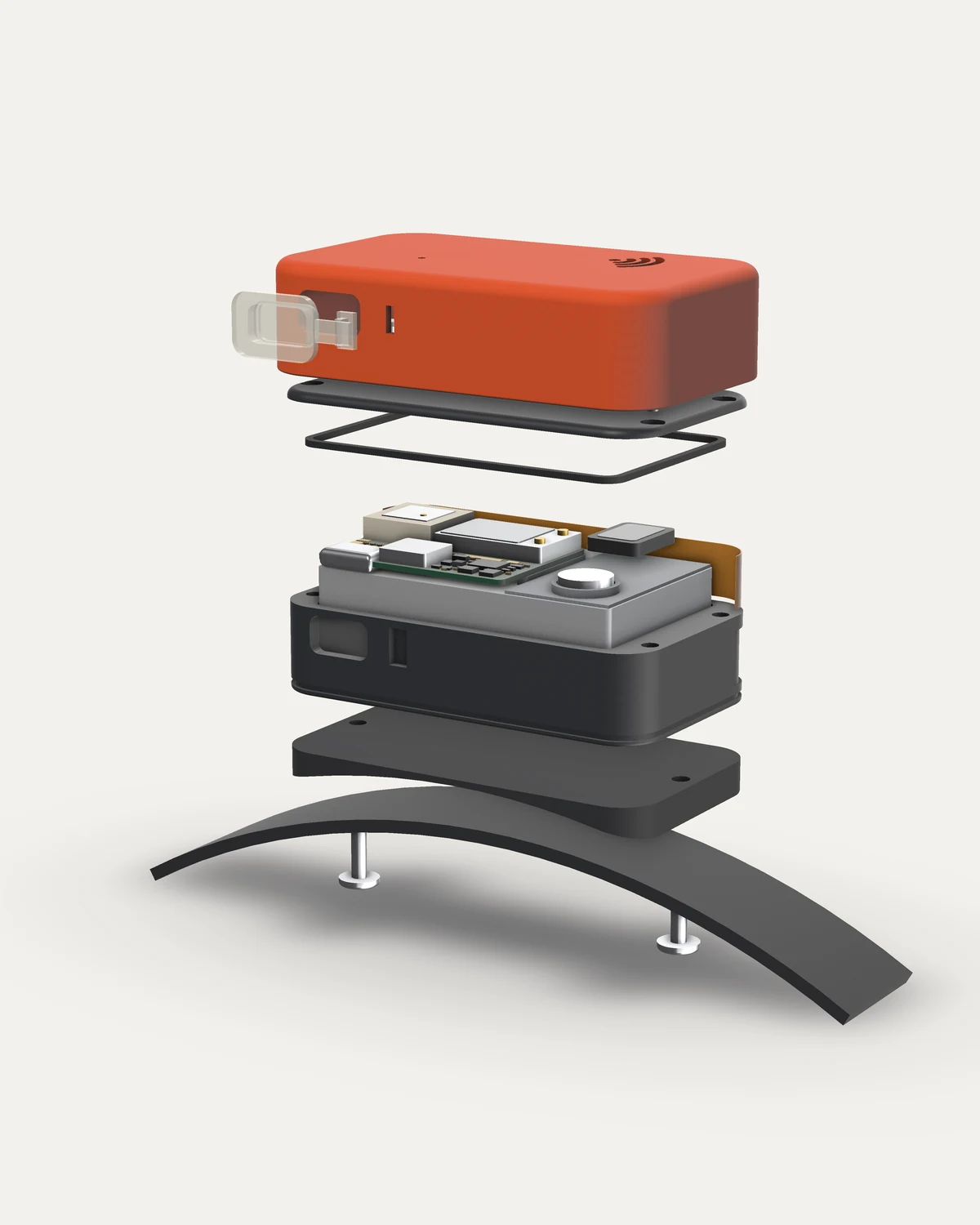
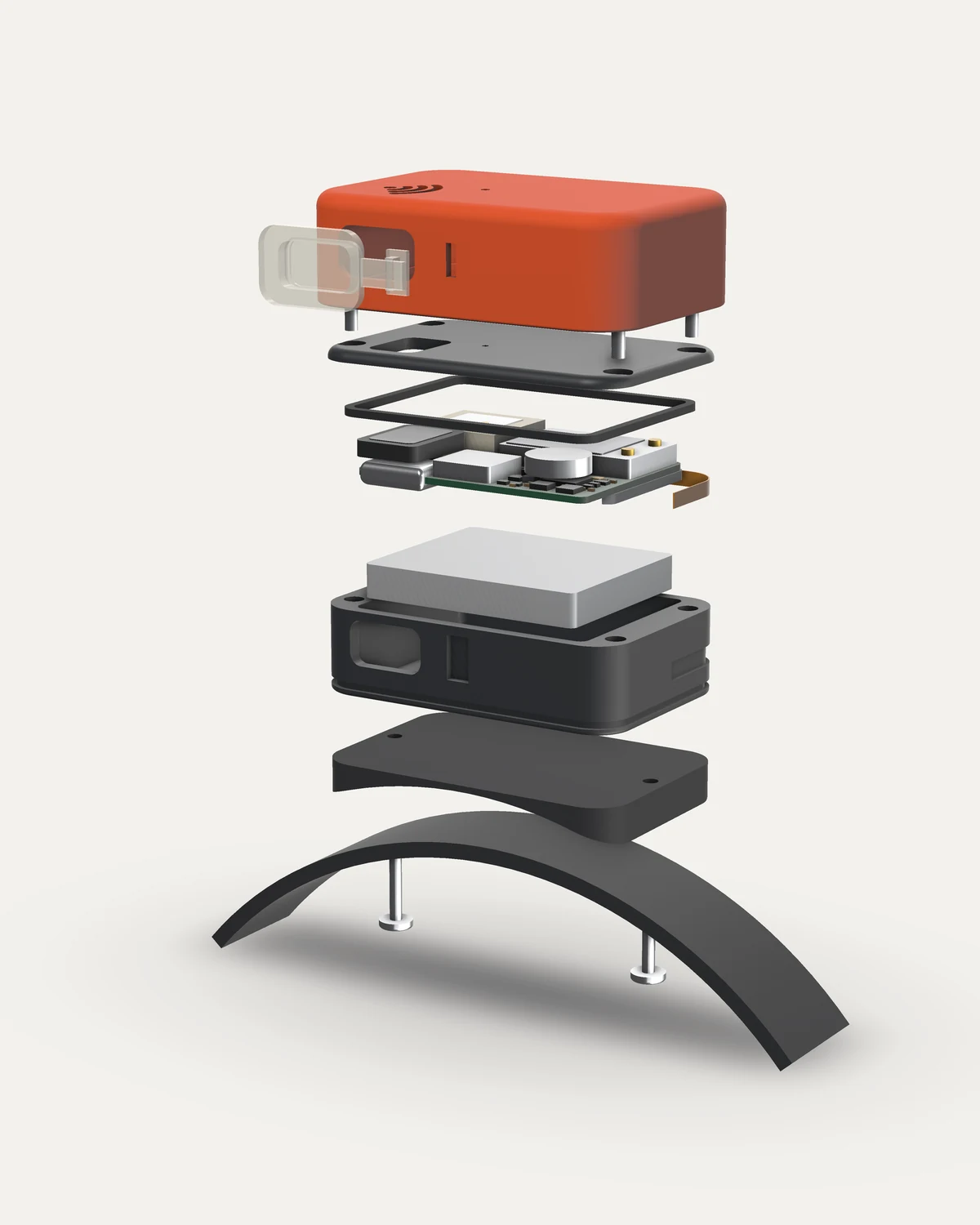
The board lies over the battery instead of beside it. The box keeps its 81 × 48 mm footprint and the battery grows from 1200 to 2000 mAh. It is 1.7 mm thicker, because the box is sized for the largest cell the battery's data sheet allows.
With the parts chosen for it, that is about 3 days of tracking in place of about 18 hours, and about 3 months at home in place of about 13 days.

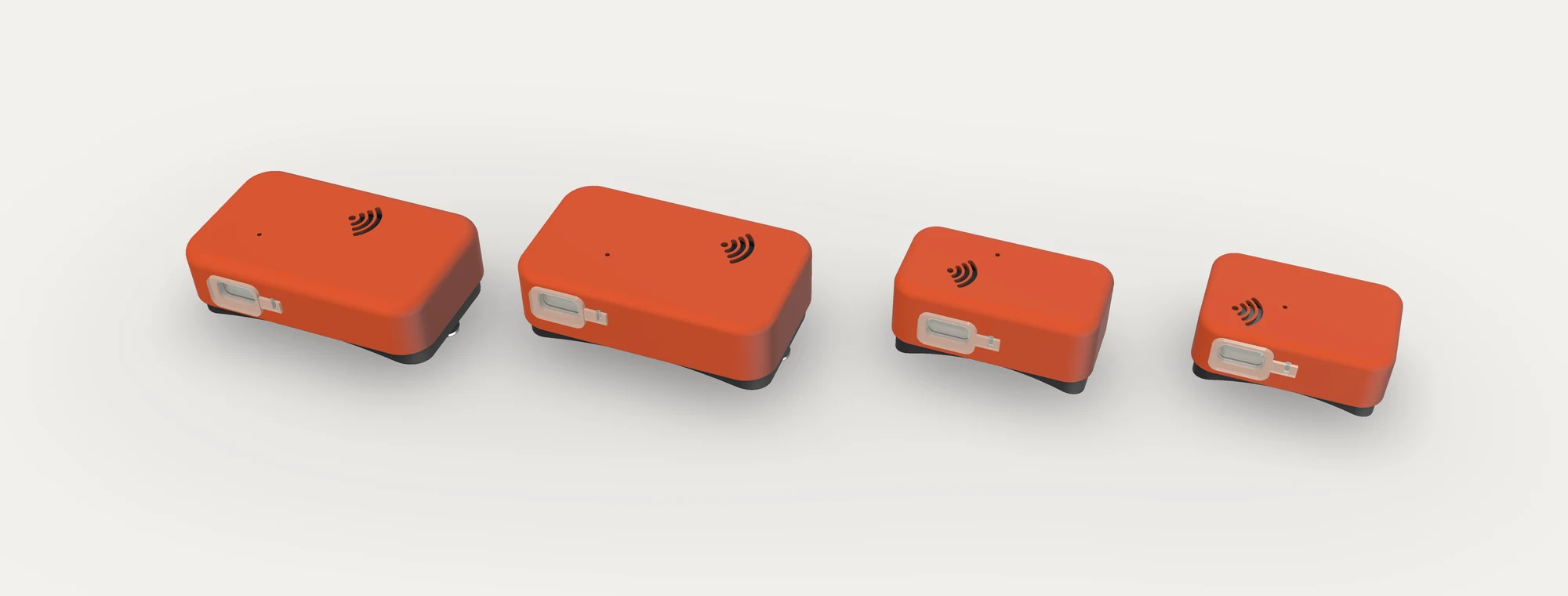
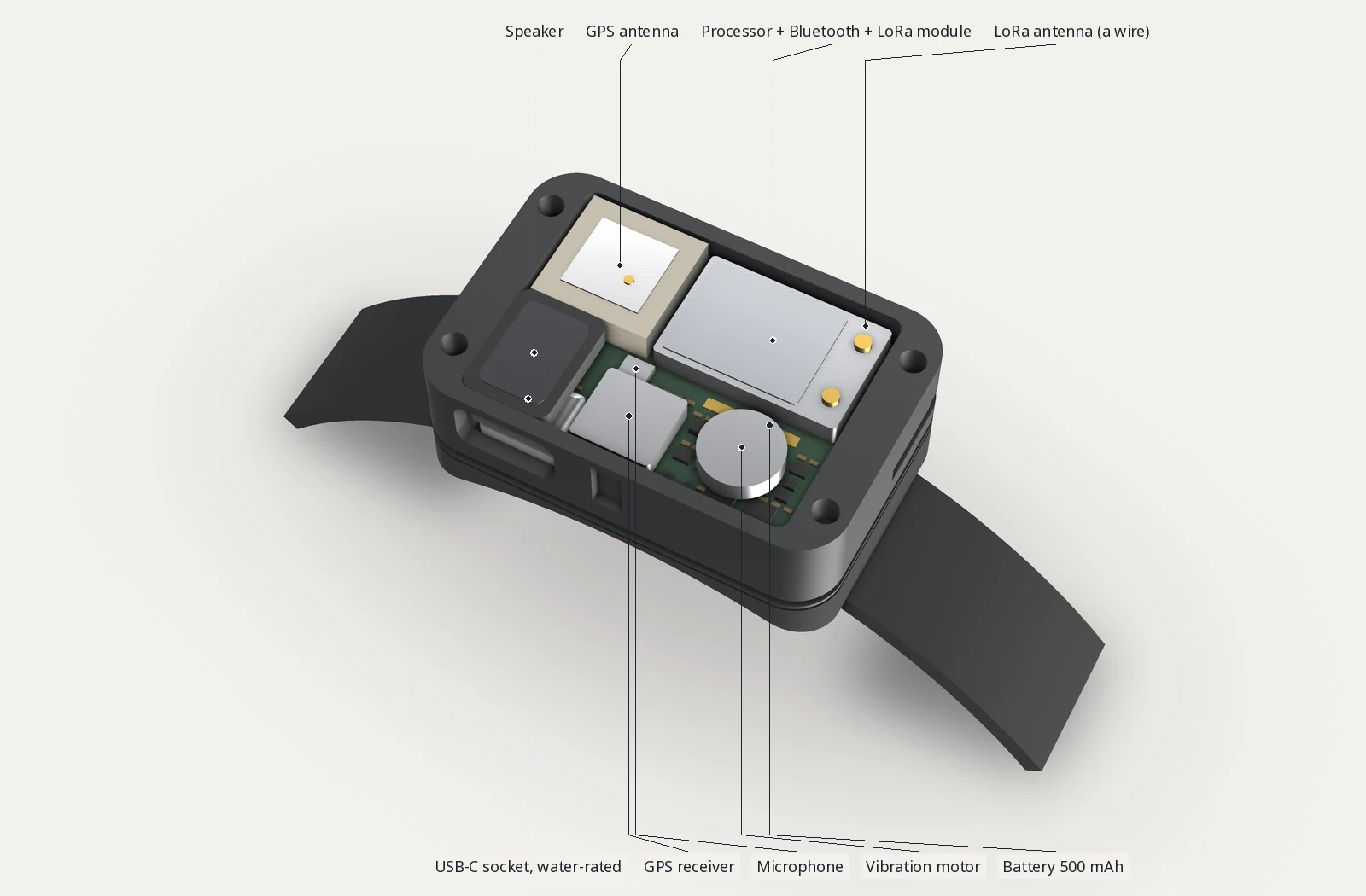
On this board the small collar is 55 × 38 × 17 mm in place of 61 × 33 × 21 mm: shorter and thinner, a little wider. Its battery grows from 350 to 500 mAh.
Left to right: the collar, the collar on the custom board, the small collar, the small collar on the custom board.

The GPS receiver draws 12 mA where the store-bought GPS board draws 41. Tracking every 2 seconds lasts about 3 days in place of about 18 hours.
The microphone waits for a loud sound on almost nothing and wakes the processor only then. Listening for barks stops being the biggest draw at home.
The charger takes up to half an amp and watches the battery's temperature: about 5 hours for a full charge in place of about 13 hours.
The GPS receiver's power is switched right off at home. The USB-C socket is water-rated by itself, so the clear plug becomes a second seal. There is memory for about two minutes of recorded voice, and pads for the light strips.
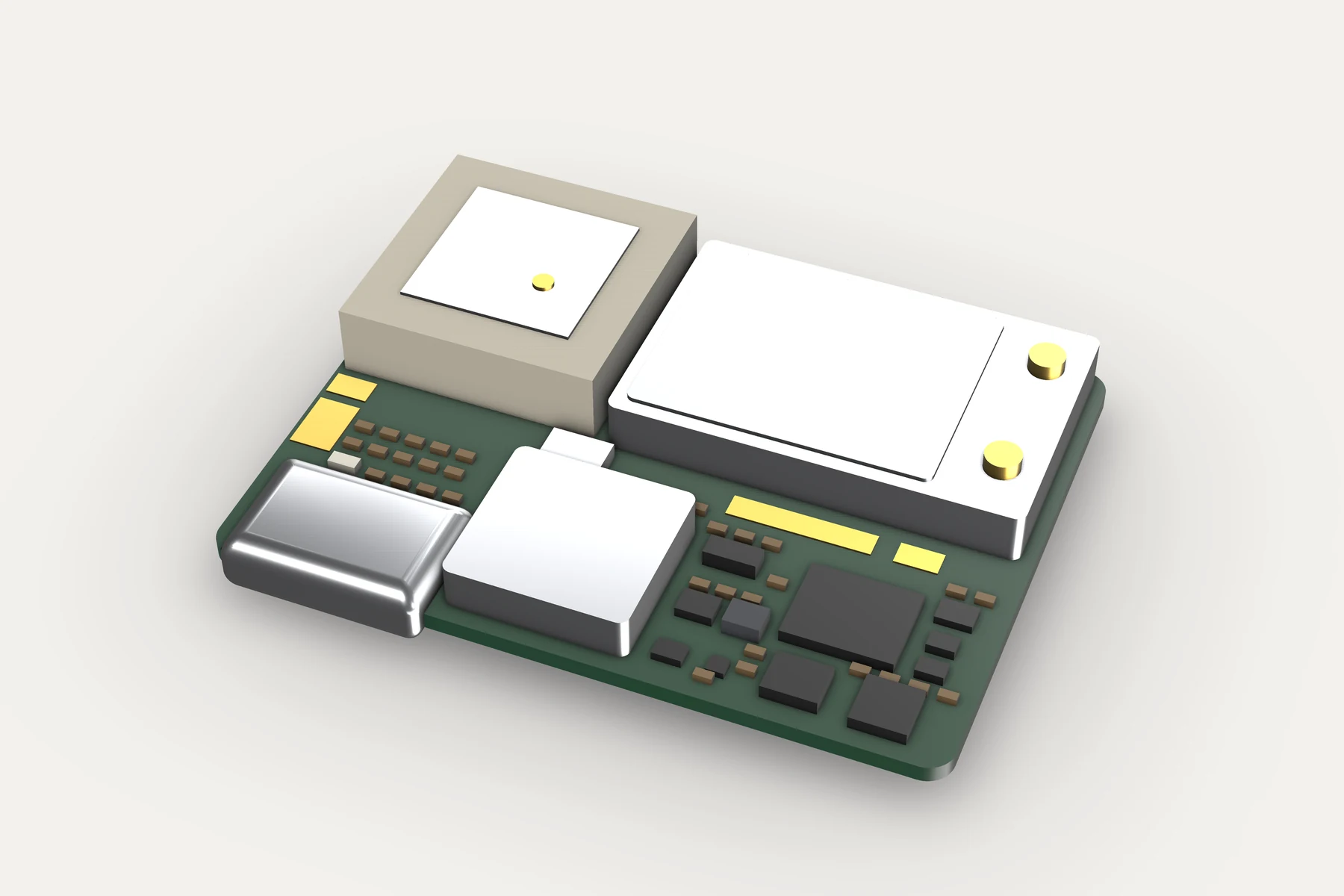
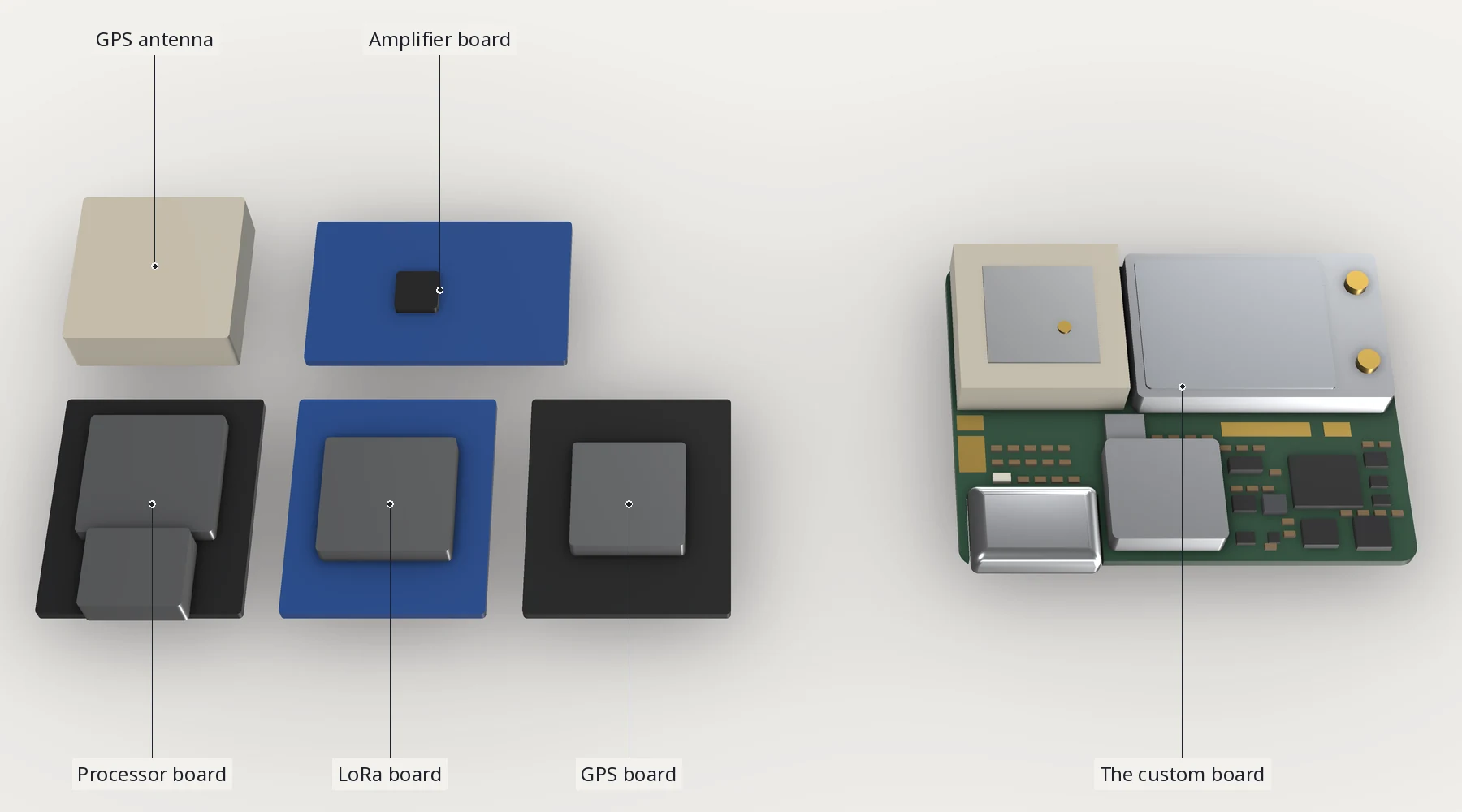
What exists today: the parts are chosen, the connections are listed, and the board's outline and the place of every part are drawn and fitted into both collars.
What does not exist yet: the copper. Someone has to draw the tracks in a board design program and check them before a maker can build it. The files to start from are in the build guide.
All the way round
Drag to turnInside
The board is the same in both collars. The speaker and the motor sit beside it in the large box and over its low parts in the small one.


Who can make it
Any of these will make a handful of boards. The first three are in the United States. Read on each maker's own pages on 2026-11-23.
| Maker | Where | What it does | How long |
|---|---|---|---|
| MacroFab | Houston, Texas | Makes the board and solders the parts on. No minimum order. Takes KiCad design files as they are. Buys the parts, or uses parts you send. | as little as 10 days |
| CircuitHub | Massachusetts | Board and assembly from one board up, four layers, parts on both sides. Takes KiCad files. | 3 days for its prototype service |
| Screaming Circuits | Oregon | Board and assembly from one board up. Buys the parts or uses yours. | 1 to 10 days once it has the parts |
| JLCPCB | China | Board and assembly from two boards up. Parts on both sides needs its Standard service. It stocks the radio module this board uses. | 4 days or more, plus shipping |
| PCBWay | China | Board and assembly from five boards up. Also offers to draw the board. | 3 to 5 days, plus shipping |
| Seeed Fusion | Shenzhen, China | Board and assembly from one board up. Seeed also offers to design a whole product round its own modules, but then Seeed owns the design unless agreed otherwise. | from 7 working days, plus shipping |
| OSH Park | United States | Bare boards only: three four-layer boards of this size for about $18.60. Someone still has to solder the parts on. | 9 to 14 days |
Boards assembled in China now carry US duty. JLCPCB and PCBWay collect it up front: PCBWay estimates 47.5 percent on assembled boards, and JLCPCB quotes 35 percent or more. The $800 duty-free allowance is suspended. Source.
Before any maker can start, someone has to draw the copper (the layout) from the parts and connections listed here. JLCPCB's layout service charges $0.46 a pin with assembly, $100 at least. PCBWay and Seeed also offer it, with no prices published. KiCad, the free design program, is what MacroFab, CircuitHub and OSH Park take files from. Source.
The radio module is already approved by the FCC (ID 2AF6B-RAK4630), but only with the antennas it was tested with (up to 3 dBi, on a connector), kept 20 cm from people, and with no second transmitter beside it. A collar is handled by people, so a product for sale needs that approval extended, and the finished collar needs its own emissions test either way. All of this is work for before a sale. Source.
Numbers
| Board | 40 × 30 mm, 1.0 mm thick, four copper layers; tallest part 4.2 mm |
|---|---|
| Collar on this board | 81 × 48 × 20 mm, 2000 mAh, about 101 g without the strap |
| Small collar on this board | 55 × 38 × 17 mm, 500 mAh, about 49 g without the strap |
| Battery life, collar, worked out | About 3 days tracking every 2 seconds; about 17 days on walks; about 3 months at home |
| Battery life, small collar, worked out | About 19 hours tracking every 2 seconds; about 4 days on walks; about 4 weeks at home |
| Charging | About 5 hours for 2000 mAh, with the battery's temperature watched |
| Parts on the board | About $61 a board in small numbers, before assembly |
| Status | Parts chosen, placement drawn, connections listed. Layout not drawn. Not built. |
Battery life figures are worked out from the parts' data sheets with cautious inputs; the build guide shows the sums. They are not test results. Weights are worked out from the print files and the parts' data sheets.