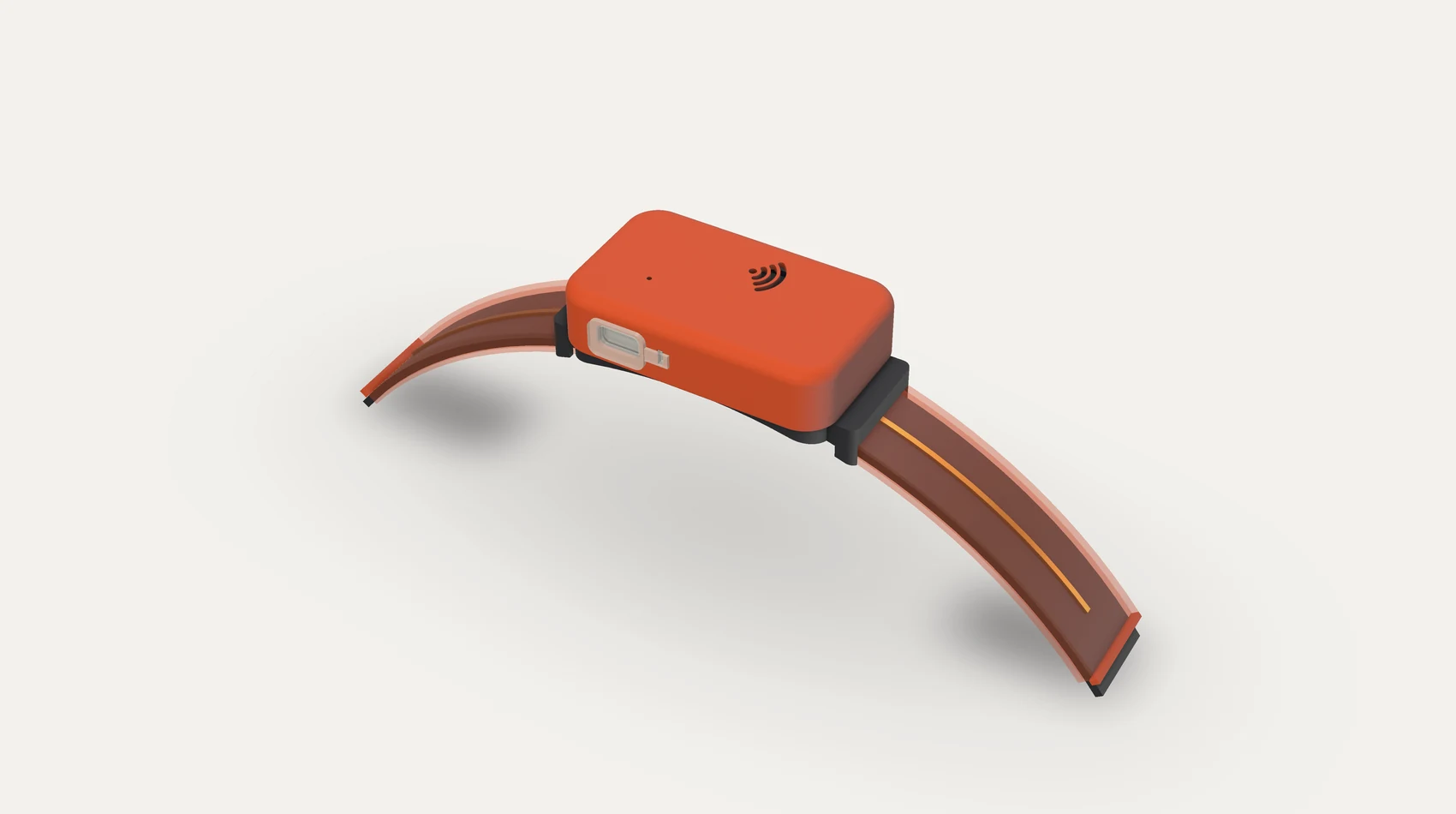
[Name] Antennas
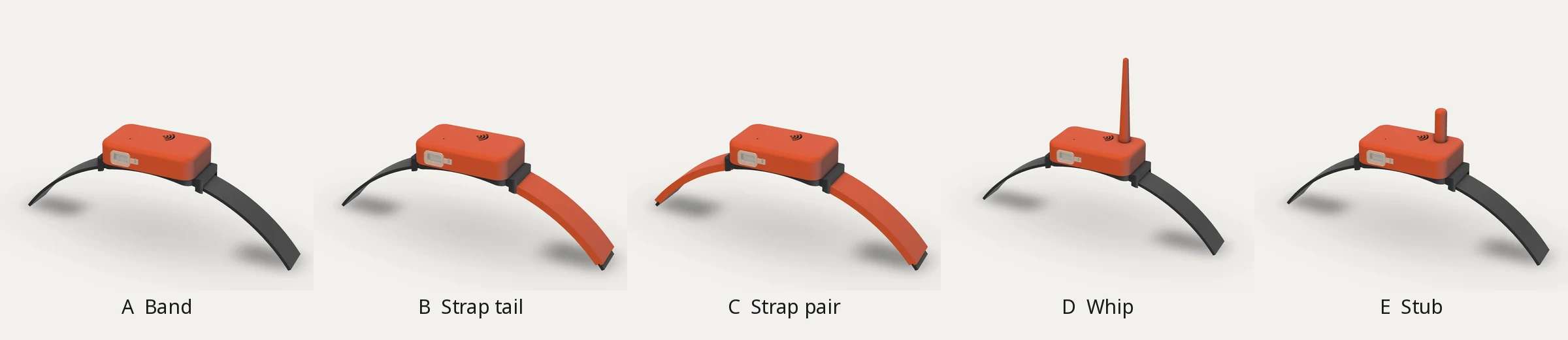
How far the collar reaches depends more on its antenna than on anything else, and the dog's own body is in the way. No drawing settles that. So one test collar takes five antennas, one at a time, and the dog decides.
A · Band
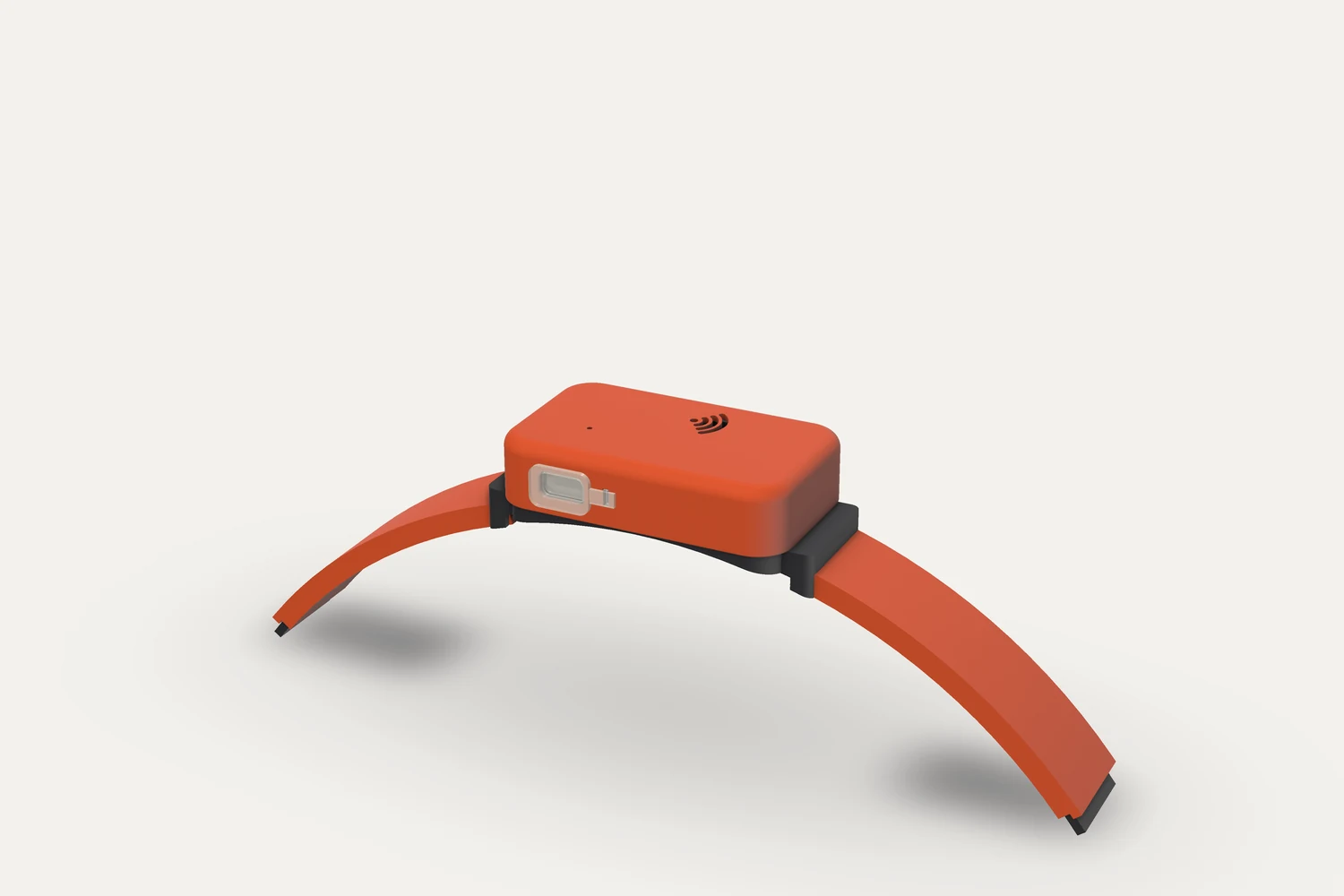
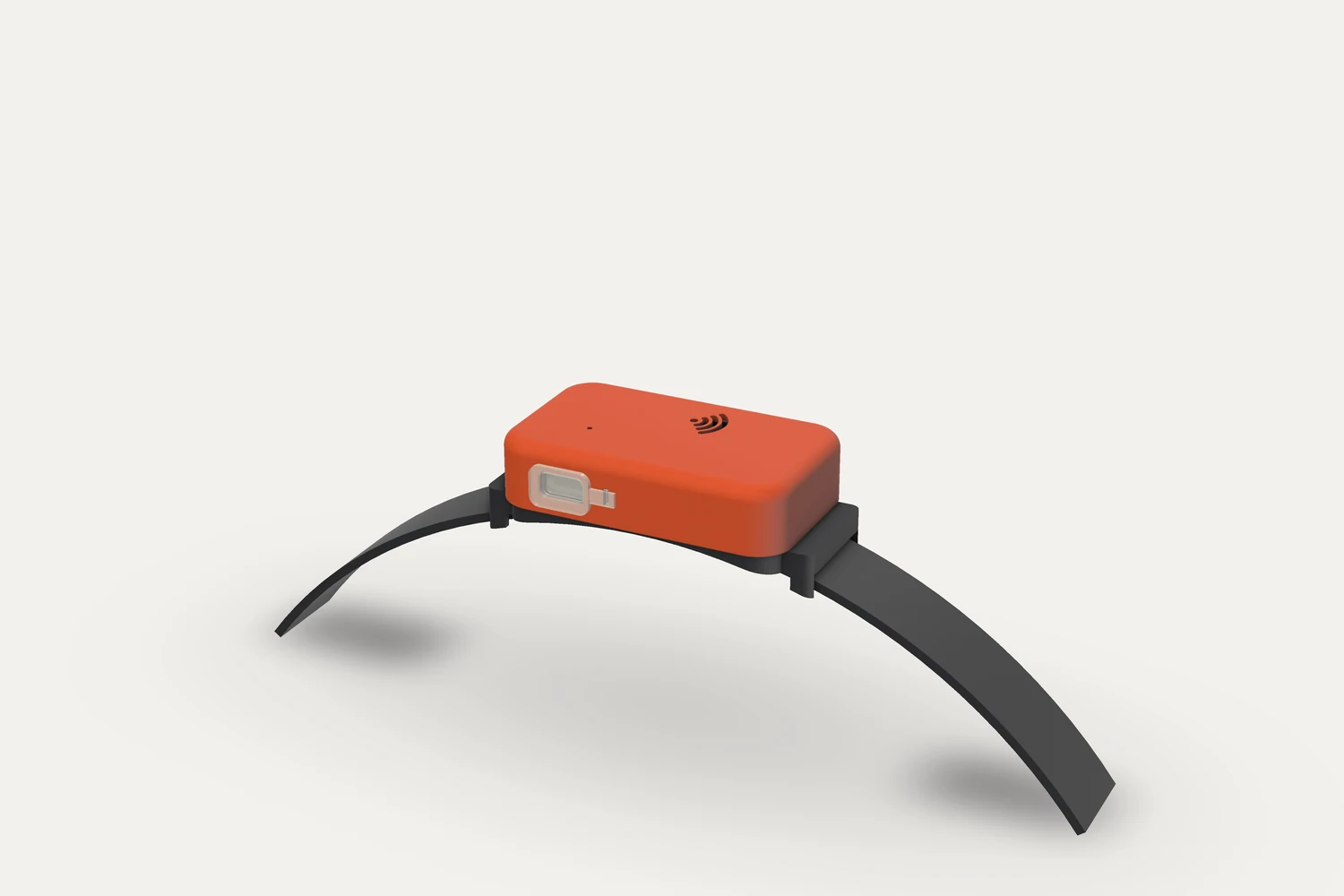
A stick-on strip wraps round the outside of the hard box, under the bumper. This is the antenna the collar is drawn with.
What to expect: the safest shape and probably the weakest signal. The strip is bent round the battery and sits a finger's width from the dog's neck.
A body soaks up radio at this frequency. Measured on people, an antenna worn 8 mm from the body kept about a fifth of its signal, and at 20 mm about a quarter (Kellomäki, doctoral thesis). Nobody has published the same for a dog.

B · Strap tail
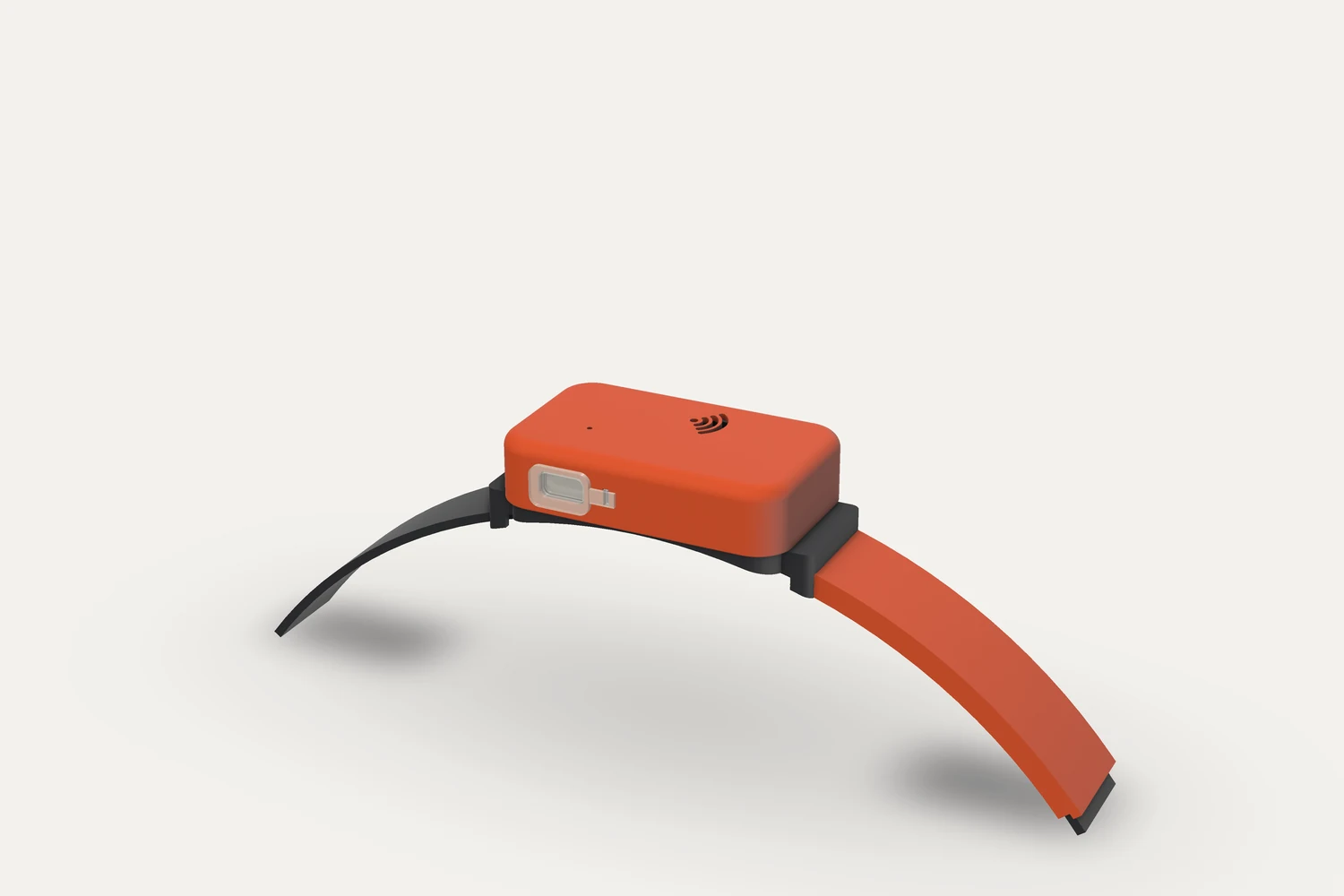
A 78 mm wire lies along the strap on one side of the box, under a soft sleeve. It is as flat as the band, and nothing can catch on it.
What to expect: hard to call. It is a full-length wire, but it lies 3 mm from the neck, and being that close to a body may cost more than the length gains.

C · Strap pair
The same wire on both sides of the box. Together they make a balanced antenna that does not need the box and its battery as its other half.
What to expect: steadier than the single tail as the dog turns, with the same weakness of lying against the neck.

D · Whip
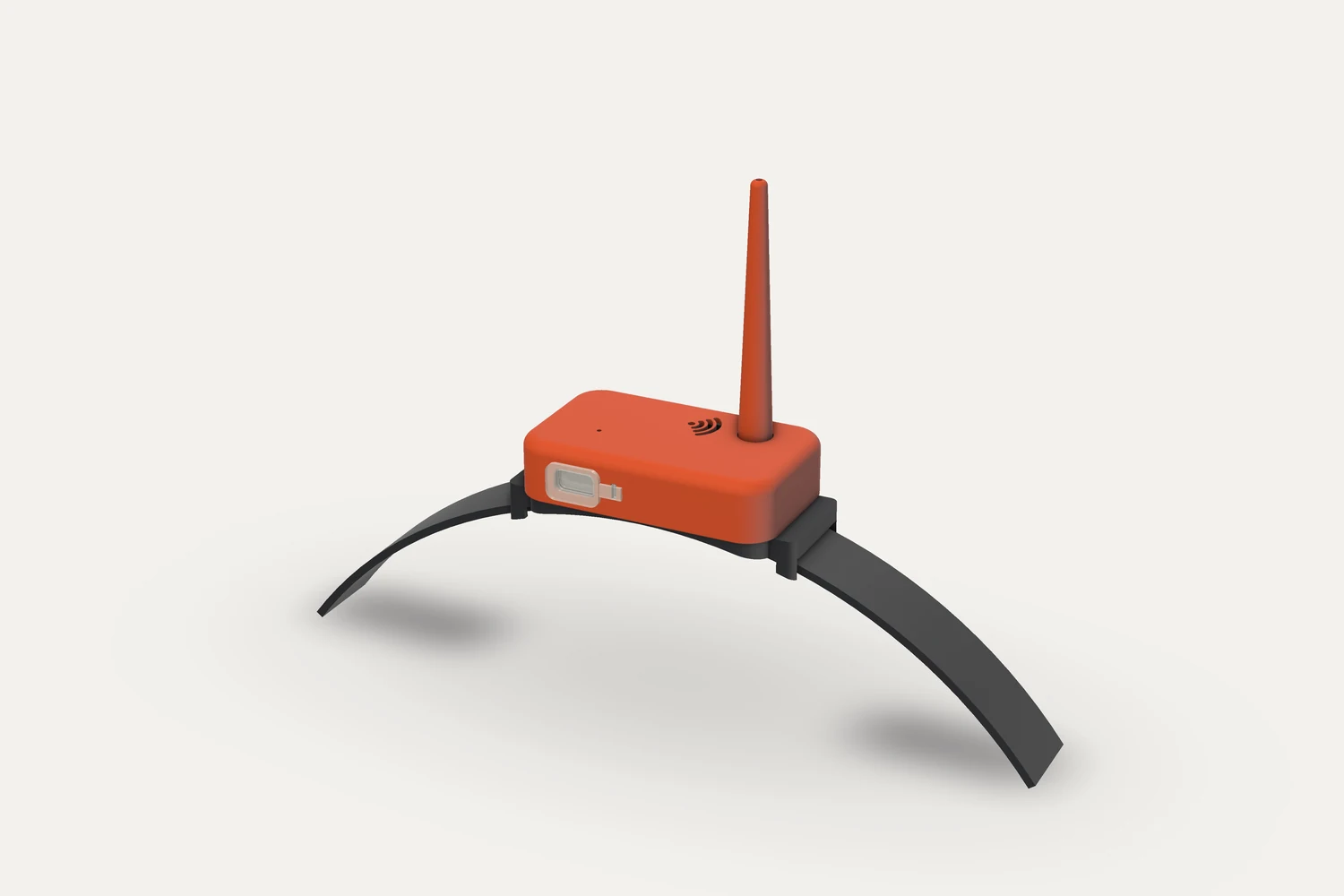
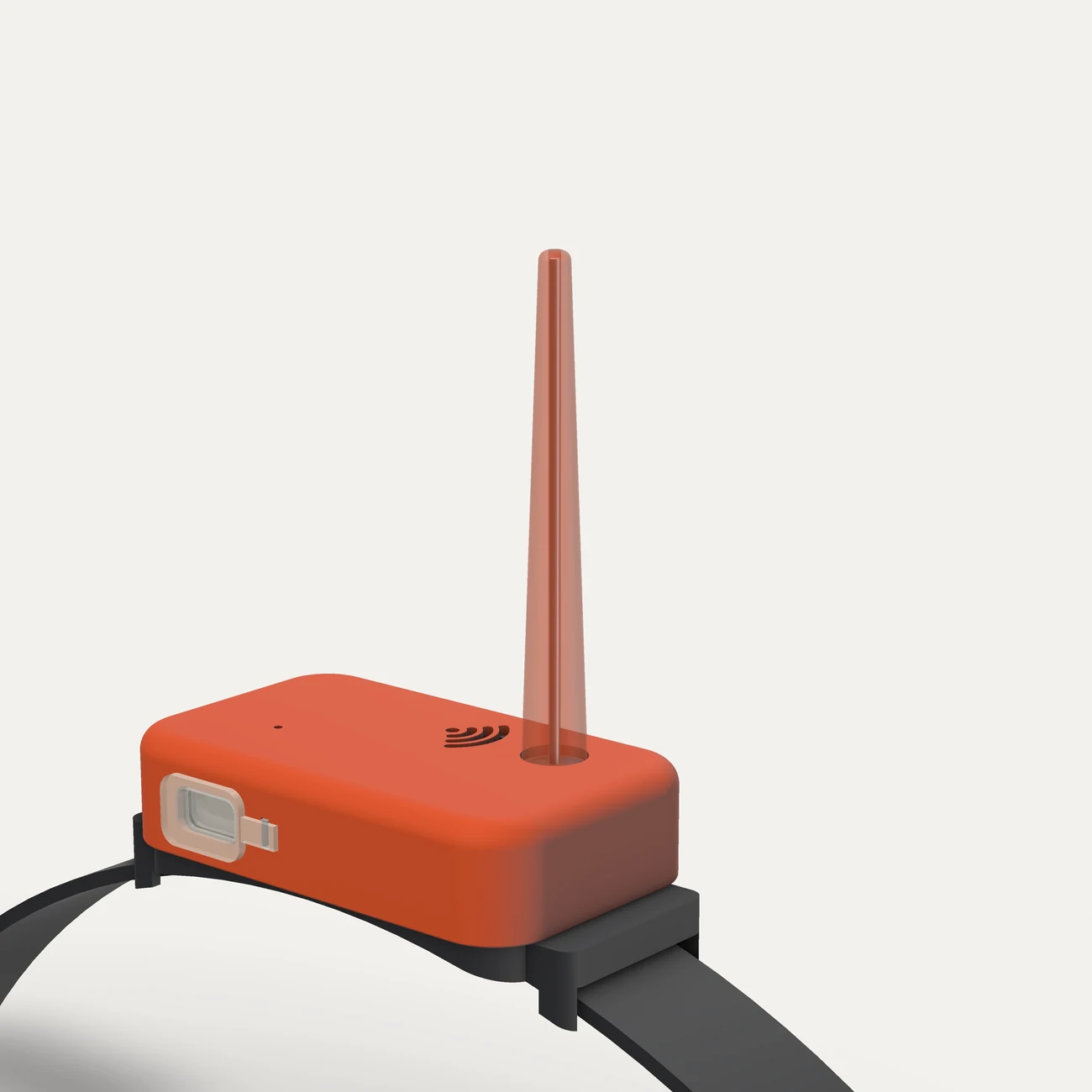
A springy steel wire, 78 mm long, stands up from the lid inside a soft tapered sleeve. Hunting-dog collars carry whips for the same reason; one that works on this band lists "whip and patch antennas" (SportDOG TEK 2.0 manual).
What to expect: the best reach, because it is the only one that gets away from the body. The costs: another dog can grab it, it can catch on brush, and if the box swings under the chin it points at the ground.

E · Stub
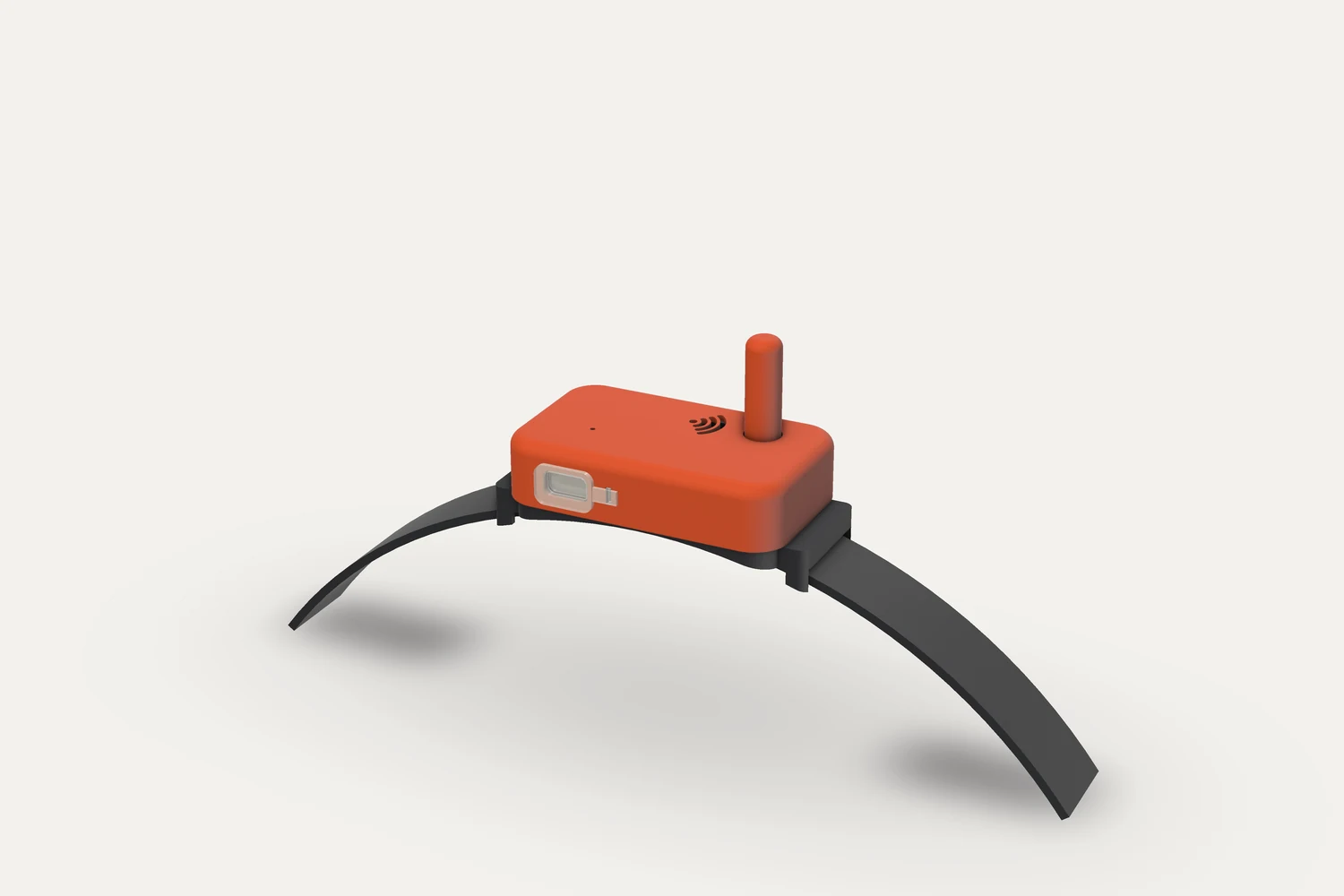
A coil about 18 mm long does the work of the long wire in a third of the height.
What to expect: between the band and the whip. Less to grab than the whip, and less reach.
Inside
The test collar is the collar with a wire hole in the floor at each end and a seat in the lid. Every antenna joins the same small socket on the radio board. The build guide lists the parts.


How to compare them
A fair test changes one thing at a time. The radio reports how strong each message arrived, so the numbers come for free.
| What to write down | A Band | B Tail | C Pair | D Whip | E Stub |
|---|---|---|---|---|---|
| Signal at 50 m (average of 100 reports) | |||||
| Signal at 200 m | |||||
| Furthest point with 9 reports in 10 arriving | |||||
| Signal with the box under the chin | |||||
| Snags, chewing, comfort (your notes) |
Reading the result: signal strength is logged in dB. Averaging many reports is what makes the number trustworthy; the radio chip's maker suggests at least a dozen (Semtech), and this test uses 100. Keep people away from the phone radio while it logs: a person standing near changes the reading (Texas Instruments). A difference under about 3 dB between two antennas is probably inside the scatter of a test like this (a judgment, not a measured figure), so treat them as equal and choose on snags and comfort. In open air 6 dB more signal is about double the distance; close to the ground it takes nearer 12 dB.
Numbers
| Band | 902 to 928 MHz, LoRa |
|---|---|
| Wire length | 78 mm to start: a quarter of a wave by the usual rule (Linx). Plastic round the wire makes it act longer, so trim it if an antenna tester shows that |
| Test collar | The collar's box with a wire hole in the floor at each end and a seat in the lid |
| Printed parts | 9 files, 62 g in all |
| Before a sale | The radio module's FCC approval covers only the kinds of antenna it was tested with, up to 3 dBi. The antenna that wins has to fit inside that, or be approved again |
| Status | Drawn, not built. No antenna here has been tuned or measured |